
Indian Army Pioneers Satellite Internet Deployment for Disaster Relief in Sri Lanka: A Technological Breakthrough
- Date & Time:
- |
- Views: 54
- |
- From: India News Bull
New Delhi:
The Indian Army has achieved a significant milestone by successfully implementing satellite-based internet connectivity to restore essential communications in flood-affected areas of Sri Lanka. This groundbreaking approach to disaster response demonstrates how technology can be effectively leveraged during humanitarian crises.
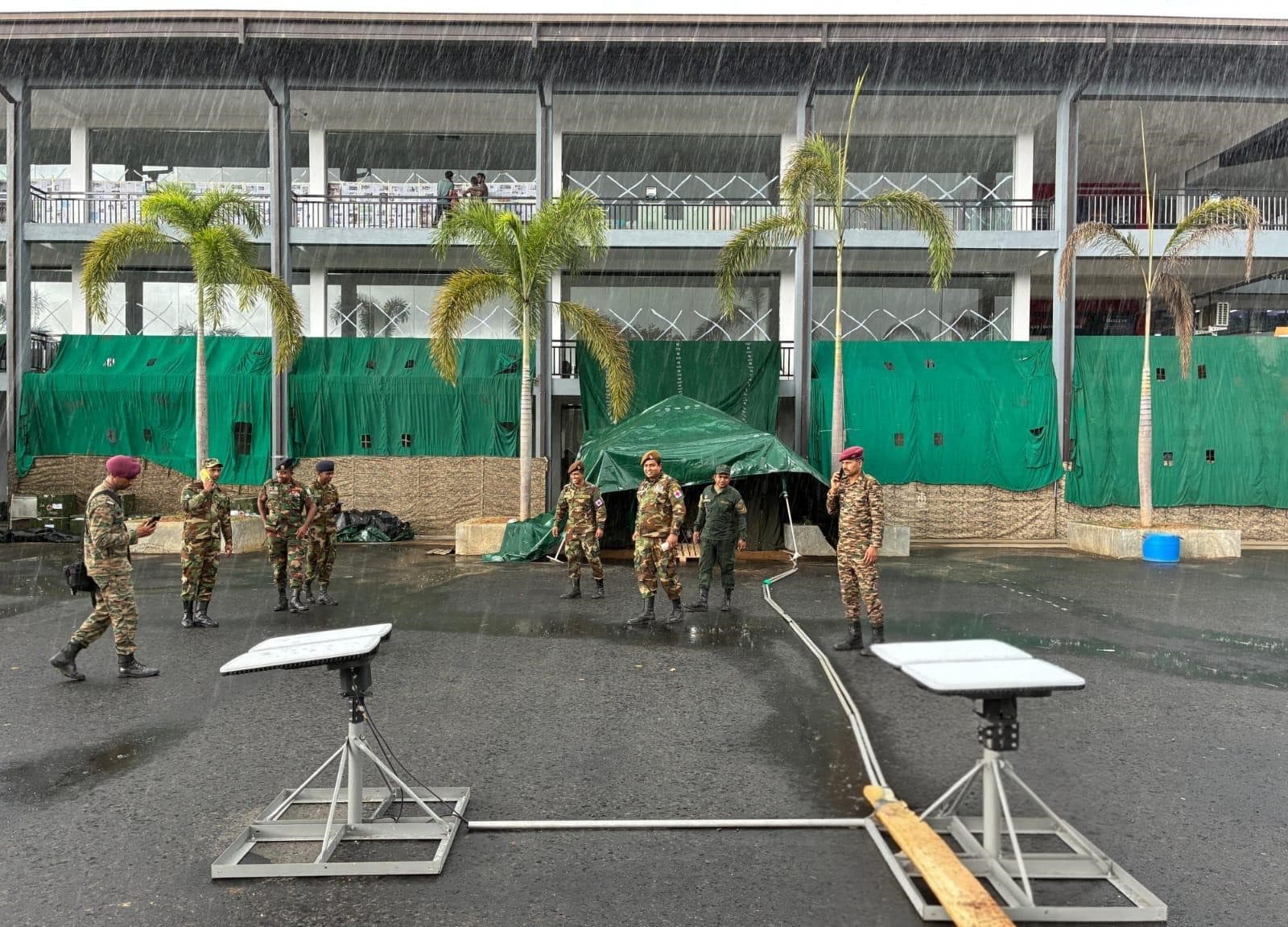
Utilizing Eutelsat's OneWeb Low Earth Orbit (LEO) satellite network in collaboration with Airtel, this initiative highlights the revolutionary potential of space-based internet solutions for humanitarian operations in disaster zones.
When Cyclone Ditwah caused unprecedented flooding across Sri Lanka, terrestrial communication networks were severely damaged, leaving many communities isolated. As part of Operation Sagar Bandhu, India's comprehensive Humanitarian Assistance and Disaster Relief (HADR) mission, the Indian Army faced significant challenges in maintaining effective communication in remote, devastated regions.
The solution came through Eutelsat's OneWeb LEO constellation, which is specifically designed to deliver high-speed, low-latency connectivity in even the most difficult-to-access terrains. By deploying OneWeb terminals on the ground, the Army successfully established secure and reliable communication links that enabled continuous telemedicine consultations between affected populations and specialist doctors in India.
This connectivity proved crucial, allowing immediate medical diagnosis and treatment guidance for injured and vulnerable individuals. Beyond healthcare applications, the satellite internet supported vital coordination between rescue teams, facilitated logistics planning, and provided real-time situational updates essential for operational continuity during the crisis.
This deployment represents more than just a tactical achievement; it serves as a compelling case study for the role satellite internet can play in disaster resilience strategies. When natural disasters like floods, earthquakes, or cyclones strike, terrestrial infrastructure often fails completely. LEO satellites, which orbit closer to Earth than traditional geostationary satellites, offer advantages including rapid deployment capability, minimal latency, and comprehensive coverage – characteristics that are invaluable for bridging digital divides during emergencies.
Neha Idnani, Regional Vice President for APAC at Eutelsat, emphasized the importance of this technology: "The ability to maintain high-quality communications in crisis situations is vital. We remain committed to equipping organizations on the ground with secure, resilient connectivity required to safeguard lives and enable essential services."
Despite the success demonstrated in Sri Lanka, India's broader adoption of satellite internet technology faces regulatory constraints. Currently, Eutelsat operates under a limited testing license, with commercial services still awaiting regulatory approval. Meanwhile, other global providers like SpaceX's Starlink are eager to enter the Indian market. Starlink has already proven its utility in disaster zones worldwide and could complement existing solutions like OneWeb, but policy obstacles continue to hinder progress.
Industry experts suggest that enabling satellite broadband deployment at scale could transform connectivity for remote villages, border regions, and disaster-affected areas. However, issues related to spectrum allocation, licensing regulations, and security considerations have slowed regulatory advancement. For now, initiatives such as the Indian Army's partnership with Eutelsat and Airtel serve as valuable demonstrations of what becomes possible when advanced technology meets humanitarian needs.
The satellite connectivity initiative formed part of a larger relief operation launched by India on November 28. Under Operation Sagar Bandhu, the Indian government delivered 53 tons of relief supplies, deployed NDRF search-and-rescue teams, and evacuated stranded civilians including foreign nationals using Navy and Air Force resources.
More than 2,000 Indian citizens were evacuated during the operation, reinforcing India's position as a First Responder in the Indian Ocean region, guided by its Neighbourhood First policy and Vision MAHASAGAR principles.
As climate-related disasters continue to intensify globally, the need for resilient, rapidly deployable connectivity solutions will only increase. Satellite internet technologies – whether provided by OneWeb, Starlink, or future systems – offer critical communication lifelines when conventional networks fail. For India, the challenge ahead lies in developing a regulatory framework that effectively balances security requirements with technological innovation, thereby unlocking the full potential of space-based broadband for both civilian needs and strategic applications.
Source: https://www.ndtv.com/india-news/operation-sagar-bandhu-in-a-first-indian-army-deploys-satellite-internet-for-cyclone-ditwah-hit-sri-lanka-flood-relief-9823459