
Delhi Air Pollution Crisis: AQI Improves Slightly to 'Very Poor' Level as City Continues to Battle Hazardous Smog
- Date & Time:
- |
- Views: 37
- |
- From: India News Bull
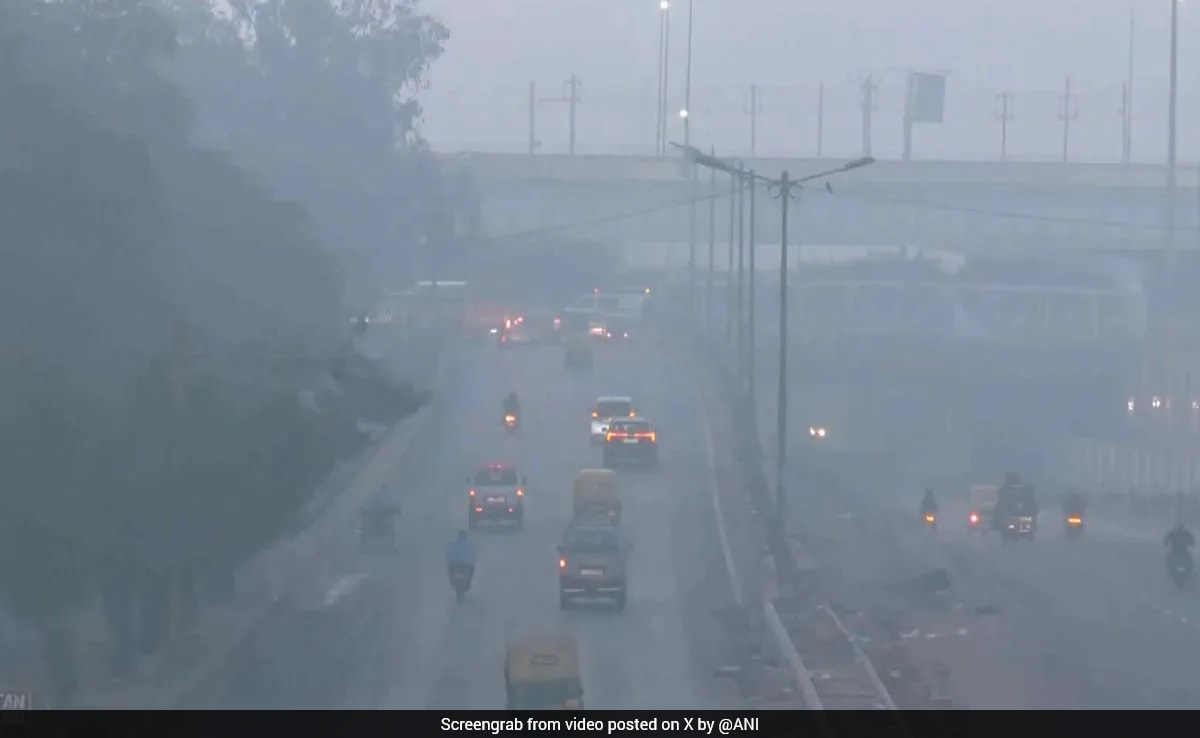
Delhi's overall Air Quality Index (AQI) registered at 378 on Tuesday morning, placing it in the 'very poor' category according to Central Pollution Control Board (CPCB) data.
This represents a slight improvement from Monday's readings, when the AQI reached 427 in the afternoon, falling into the 'severe' category.
Despite this marginal improvement, hazardous pollution levels continued to plague the national capital. A thick layer of toxic smog enveloped the city, significantly reducing visibility and causing distress to residents.
Major locations across Delhi reported concerning AQI levels, with India Gate recording 380 and Sarai Kale Khan measuring 359, both classified as 'very poor' by CPCB standards.
Ghazipur and Anand Vihar recorded particularly alarming readings around 410, placing these areas in the 'severe' pollution category.
The CPCB categorizes AQI levels as follows: 0-50 'good', 51-100 'satisfactory', 101-200 'moderate', 201-300 'poor', 301-400 'very poor', and 401-500 'severe'.
Amid deteriorating air conditions, Delhi's Indira Gandhi International Airport issued a fog advisory Tuesday morning, warning passengers about potential flight disruptions due to reduced visibility.
In a social media announcement at approximately 6:06 AM, airport authorities stated that while "flight operations are steadily recovering, disruptions may persist for certain departures and arrivals."
Travelers were encouraged to contact their airlines directly for accurate flight schedule updates, with airport management assuring that ground staff had been deployed across terminals to provide assistance.
The fog advisory coincides with Delhi's ongoing struggle with dense fog and poor air quality, which have significantly impacted visibility during early morning hours and disrupted air traffic movements.
One tourist visiting Delhi shared his experience with ANI, saying, "The situation here is very serious because of pollution. I arrived in Delhi last evening from Indore. Compared to Indore, I am experiencing difficulty in breathing. Visibility here is very poor; we cannot see the India Gate properly. It is affecting our health."
Air quality conditions varied across other major Indian cities. Ahmedabad (117), Bengaluru (104), Chennai (135), Hyderabad (103), and Mumbai (109) mostly reported 'moderate' to 'satisfactory' levels, while Jaipur (187), Lucknow (158), Patna (156), and Pune (194) recorded 'moderate' air quality.
In response to the crisis, the Commission for Air Quality Management (CAQM) for NCR and adjoining areas convened the first meeting of its Expert Committee on Monday. Chaired by Ashok Jhunjhunwala and co-chaired by Prof Randeep Guleria, the committee focused on addressing pollution from vehicular emissions in Delhi-NCR.
Discussions encompassed "assessment of segment-wise vehicular emission contributions, exposure risks, EV readiness and infrastructure needs," according to a CAQM statement.
The committee committed to presenting actionable recommendations to reduce vehicular emissions in upcoming meetings.
With air pollution levels previously crossing the 450 mark and reaching the 'severe plus' category, CAQM had imposed stage IV restrictions under the Graded Response Action Plan (GRAP).
The Delhi Government has responded to the persistent pollution crisis by issuing a directive for schools to shift from hybrid to fully online learning for students up to class 5. This measure will remain in effect until further notice as AQI levels continue to remain in the severe category.
Source: https://www.ndtv.com/india-news/delhi-pollution-delhis-air-quality-improves-marginally-aqi-very-poor-at-378-9822682