
India's Air Quality Crisis: Experts Call for Science-Based Standards as WHO Guidelines Remain Unimplemented
- Date & Time:
- |
- Views: 38
- |
- From: India News Bull
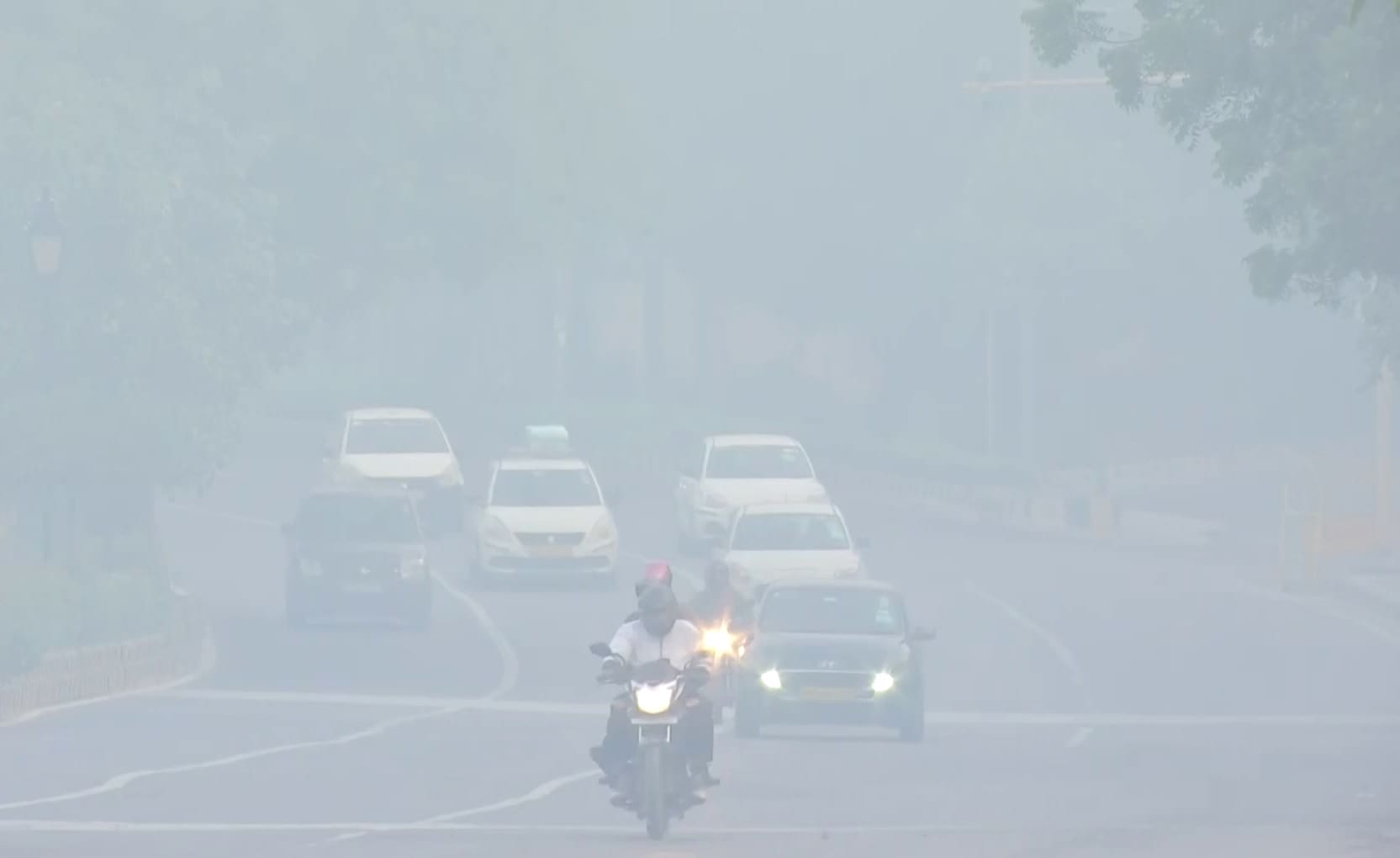
Experts have highlighted that India consistently ranks among nations with the highest PM 2.5 pollution levels globally.
Critics are labeling it a calculated deflection as the Union government reinforces its position that World Health Organization (WHO) air quality guidelines are merely "guidance documents" rather than enforceable regulations.
Minister of State for Environment Kirti Vardhan Singh provided a written response to the Rajya Sabha on Thursday, coming shortly after the 2024 World Air Quality Report by Swiss organization IQAir revealed the alarming scope of the issue: 13 of the world's 20 most polluted cities are located in India, with Meghalaya's Byrnihat occupying the unfortunate top position and Delhi experiencing its sixth consecutive year as the world's most polluted capital.
Singh contended that such global assessments lack "official authority," maintaining that India customizes its standards according to "local geography, socio-economic factors, and even the immune power of its people".
He stated that the country's 2009 National Ambient Air Quality Standards—unchanged for 16 years despite specialists' appeals for updates—are suitable for these realities, with an annual PM 2.5 limit of 40 micrograms per cubic meter considered "appropriate".
The WHO's 2021 guidelines advocate for a much more stringent annual PM 2.5 average of just 5 micrograms per cubic meter—eight times lower than India's threshold.
Independent monitoring conducted by IQAir estimates India's 2024 urban average at 50.6 micrograms per cubic meter, consistently exceeding even the government's own limits.
While Singh correctly notes that WHO norms carry no legal obligation and countries often adapt them locally, environmental specialists have advocated for alignment with advanced scientific standards.
The government's preferred measurement tool, the Swachh Vayu Survekshan, also struggles under scrutiny—it evaluates cities primarily on bureaucratic compliance with the National Clean Air Programme (accounting for 64% of scores), with insufficient emphasis on actual pollution data where "top performers" still remain at 70-80 micrograms per cubic meter, according to experts.
Progress under the Rs 10,000-crore National Clean Air Programme has shown mixed results.
Officials emphasized fewer "Severe+" days in Delhi this winter and an increase in "Good-Moderate" readings in 2025, attributing this to expanded monitoring networks. However, annual averages in the capital continue to hover around 90 micrograms per cubic meter—the highest among global capitals—and the programme's ambitious 20-30% pollution reduction target by 2024 was not achieved.
The central government reiterated that there exists "no conclusive national data to establish a direct correlation between deaths or diseases occurring exclusively due to air pollution", while acknowledging that "air pollution is one of the triggering factors for respiratory ailments and associated diseases".
Nevertheless, the 'State of Global Air 2020' report indicates that air pollution caused 1.67 million premature deaths in India in 2019, the most recent complete estimate, reducing average life expectancy by 5.2 years and depleting up to 3% of GDP annually through lost productivity and medical expenses.
"While official rankings may not be mandated by a global authority, independent scientific analysis, including the 2024 World Air Quality Report, consistently demonstrates that India ranks among the countries with the highest PM 2.5 pollution, with several cities repeatedly recorded as some of the world's most polluted," environmentalist Bhavreen Kandhari told NDTV.
"Experts have repeatedly warned that national standards permitting concentrations many times higher than WHO's recommended levels mean public health remains at risk, and that dismissing global data as 'not official' should not distract from the urgent need to align policy with health-based science and real-world measurements," she added.
Anju Goel, environmentalist at TERI, acknowledged the non-binding nature of WHO guidelines, but cautioned against complacency. "Yes, WHO guidelines are not binding," she stated, "and also in India, we can never achieve WHO guidelines without transboundary cooperation as even our background levels are much higher than WHO guidelines."
In November 2025, wellness advocate Luke Coutinho filed a public interest litigation in the Supreme Court of India, seeking time-bound revision of the 2009 National Ambient Air Quality Standards (NAAQS) to at least interim levels aligned with WHO 2021 guidelines. On November 18, the Supreme Court permitted the withdrawal of the petition with liberty to intervene in the ongoing MC Mehta vs Union of India case, where issues of NAAQS revision and stricter enforcement continue to be actively considered.
Source: https://www.ndtv.com/india-news/pollution-delhi-pollution-who-need-to-align-policy-with-health-based-science-experts-on-air-quality-standards-9794748