
India Advocates for Pragmatic Taliban Engagement at UN Security Council: Balancing Diplomacy and Development
- Date & Time:
- |
- Views: 60
- |
- From: India News Bull
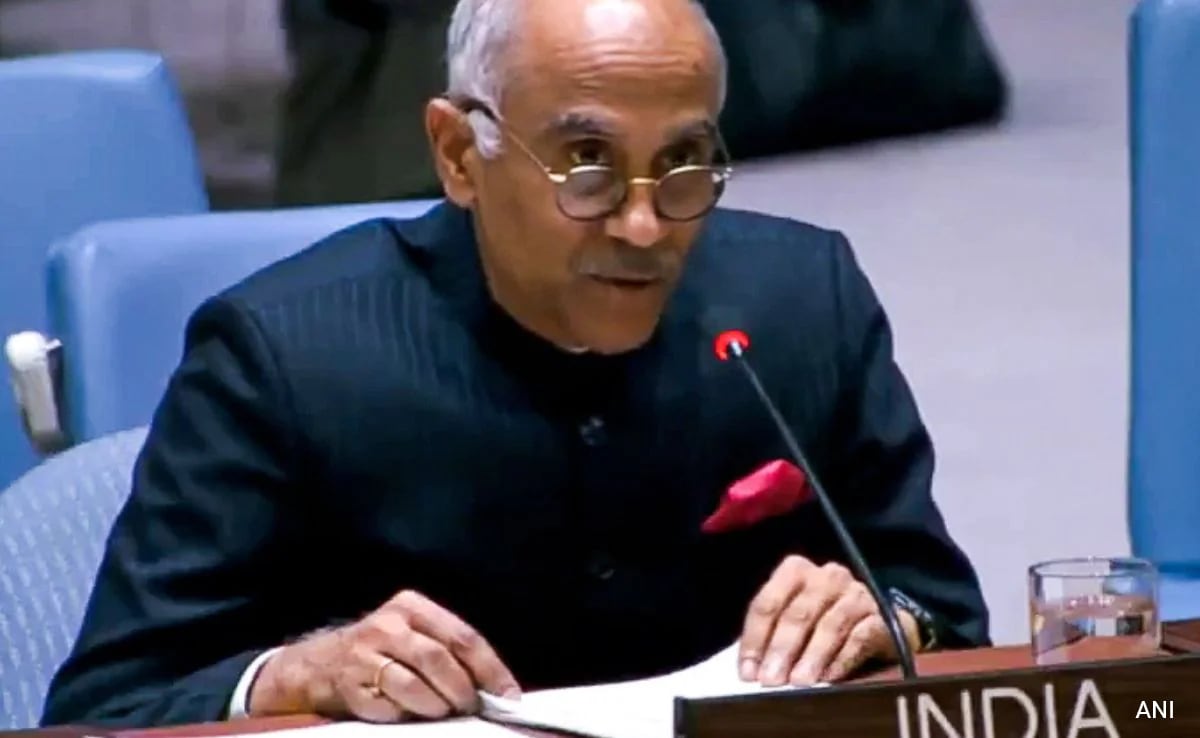
The Ambassador stated that India supports a pragmatic engagement with the Taliban.
New York:
India has called upon the United Nations Security Council (UNSC) to implement a practical and balanced approach in dealing with the Taliban, emphasizing that engagement should focus on encouraging positive developments rather than solely relying on punitive measures.
These statements were delivered by Ambassador Harish Parvathaneni, India's Permanent Representative to the UN, during a UNSC meeting focused on the situation in Afghanistan.
During the session, Ambassador Parvathaneni extended congratulations to Slovenia on assuming the Council presidency and expressed gratitude to UN officials and civil society representatives for their briefings. He emphasized that India's relationship with Afghanistan is grounded in centuries-old civilizational connections, which continue to guide India's approach.
"India deeply values its civilizational relationship and centuries-old bonds of friendship, and this history continues to guide our actions in forging deeper ties with the people of Afghanistan," he stated.
The Ambassador highlighted that India has consistently advocated for peace and stability in Afghanistan and participates in all regional discussions, including the Doha Working Group. He emphasized that coordinated regional and international cooperation is vital at this juncture.
He further noted that India has implemented more than 500 development partnership projects across various Afghan provinces, and following the recent visit of Afghan Foreign Minister Amir Khan Muttaqi to New Delhi, India has committed to strengthening cooperation in healthcare, public infrastructure, and capacity-building. India also continues its collaboration with UN agencies in priority sectors including food security, health, education, and sports.
"As decided during Foreign Minister Muttaqi's recent visit to India, India would further deepen its engagement in development cooperation projects, particularly in the sectors of healthcare, public infrastructure and capacity-building. We will continue working with UN agencies in critical areas such as health, food security, education and sports. The visit of Azizi, Afghan Minister of Industry and Commerce, to India also helped further cooperation on connectivity, trade facilitation and market access," the Ambassador said.
The Ambassador detailed India's ongoing health initiatives in Afghanistan, which include establishing a Thalassemia Centre and a Diagnostic Centre in Kabul, replacing the heating system at the Indira Gandhi Institute of Child Health, and constructing a 30-bed hospital in Bagrami district.
India will also develop an Oncology Centre, a Trauma Centre, and five maternity clinics. He mentioned that 75 Afghan nationals have received prosthetic limbs, and medical assistance continues for Afghan patients traveling to India. During Muttaqi's visit, India provided twenty ambulances.
India was among the first countries to deliver humanitarian aid following the recent earthquakes in Afghanistan and continues to support the reconstruction of damaged homes. India's assistance also encompasses food grains, school supplies, disaster relief materials, and support for refugees forcibly repatriated to Afghanistan.
Referencing the UN Secretary-General's report, Ambassador Parvathaneni noted serious humanitarian concerns. He pointed to the involuntary return of over 2 million Afghans this year, increasing Afghanistan's population by 6 percent and creating significant challenges in shelter, food, and reintegration.
He criticized Pakistan regarding recent border conflicts and their consequences. He noted that border crossing closures have disrupted trade, displaced families, and caused severe financial losses, especially during the fruit harvest season.
He stated that no country should "weaponize trade and transit vulnerabilities" against a landlocked nation.
Expressing concern over airstrikes in Afghanistan, he condemned the killing of innocent civilians, including women, children, and sports players.
He also criticized what he described as "trade and transit terrorism" resulting from restricted access for Afghanistan, calling it a violation of WTO norms and the UN Charter. He reiterated India's support for Afghanistan's sovereignty, territorial integrity, and independence.
India continues to closely monitor the security situation. It calls on the international community to ensure that UN-designated terrorist groups, such as ISIL, Al-Qaida, Lashkar-e-Taiba, Jaish-e-Mohammed, and their affiliates, do not operate from Afghan territory.
The Ambassador stated that India supports a pragmatic and incentive-based engagement with the Taliban. He argued that relying exclusively on punitive actions has not yielded results in over four years. Instead, he urged the UN and global community to adopt nuanced strategies that provide tangible benefits for the Afghan people.
"India calls for a pragmatic engagement with the Taliban. A coherent policy of engagement should incentivize positive actions. A focus on only punitive measures will only ensure that a 'business as usual' approach continues as we have been seeing now for the last four and a half years."
Concluding his remarks, Ambassador Parvathaneni affirmed that India remains committed to supporting Afghanistan's development needs.
He noted that India's decision to restore its Technical Mission in Kabul to Embassy status reflects this commitment. India will continue working with all stakeholders to expand development cooperation, humanitarian assistance, and capacity-building aligned with the needs of Afghan society.
Source: https://www.ndtv.com/india-news/india-calls-for-pragmatic-engagement-with-taliban-at-un-security-council-9793884