
The Real Ikkis Story: How 21-Year-Old Arun Khetarpal's Supreme Sacrifice Secured India's Victory in 1971
- Date & Time:
- |
- Views: 54
- |
- From: India News Bull
"Desh ki raksha mein iss balidaan ke liye aapke karodon bhai bahut kritagya hain..." (For your sacrifice in defense of the nation, millions of your brothers are deeply grateful...)
These heartfelt words were penned by Prime Minister Indira Gandhi to console Brigadier Madan Lal Khetarpal, whose son, Second Lieutenant Arun Khetarpal, sacrificed his life defending India on December 16, 1971. This handwritten letter was composed just eight days after the 21-year-old tank commander from the Indian Army's 17 Poona Horse regiment fell in battle.
The letter Indira Gandhi wrote to Arun Khetarpal's father in 1971 stands as a testament to the nation's gratitude for his supreme sacrifice.
Arun Khetarpal wasn't merely the hero of the Battle of Basantar, considered the second-largest tank battle since World War II. His extraordinary courage enabled India to secure a ceasefire the following day, December 17, resulting in what would become modern India's most significant military victory to that point.
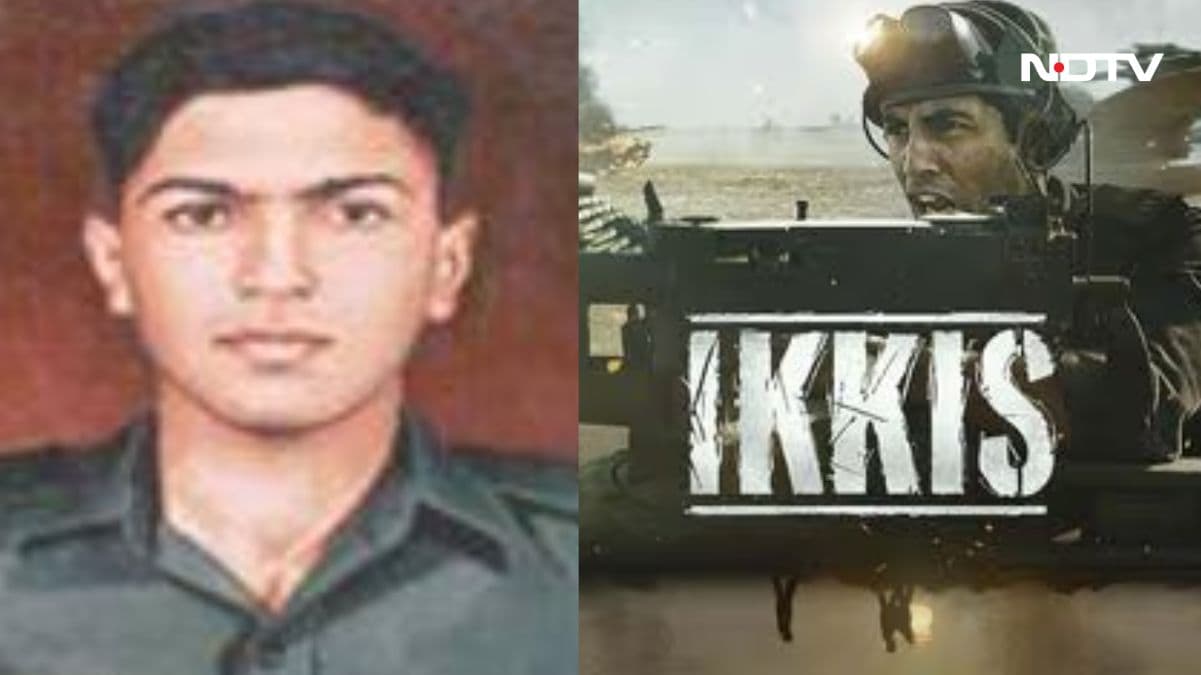
His inspiring story has now been adapted into a film titled 'Ikkis' (meaning '21', reflecting his young age at the time), featuring Agastya Nanda, Amitabh Bachchan's grandson, and directed by Sriram Raghavan. The legendary Dharmendra portrays Arun's father in what became his final screen performance.
A photo of Arun Khetarpal reveals the face of courage that helped shape India's military history.
Khetarpal's supreme sacrifice contributed significantly to elevating Indira Gandhi as the 'liberator' of Bangladesh and the Prime Minister who decisively defeated Pakistan. It's therefore unsurprising that she personally wrote this brief yet deeply emotional letter to Arun's family, demonstrating her personal appreciation for his service to the nation.
This precious document was shared by Arun's younger brother, Mukesh, who has diligently preserved and honored his brother's legacy for decades with profound respect and dedication.
Written on the official letterhead of 'Pradhan Mantri Bhawan' (Prime Minister's House) in New Delhi, the letter reads: "Main Bharat ki janata ki ore se aur apna, humdardi aur santvana ka sandesh bhej rahi hun. Aapke shok aur ranj mein saara desh shareek hai. Desh ki raksha mein iss balidaan ke liye aapke karodon bhai bahut kritagya hain aur hamari prathana hai ki aapko dheeraj aur shanti mile."
The English translation states: "On behalf of the people of India and myself, I send a message of sympathy and condolences. The entire country shares your grief and sorrow. Your millions of brothers are deeply grateful for this sacrifice in defense of the country, and we pray that you find strength and peace."
The letter was addressed to Brigadier Khetarpal, Arun's father, a retired army engineer and World War II veteran who also served in the Indo-Pak conflicts of 1948 and 1965. The military tradition in their family extended back four generations—Arun's grandfather fought in World War I, and his great-grandfather served in the Sikh Khalsa Army during the 19th century.
The Battle of Basantar was strategically crucial in the 1971 Indo-Pak War. The Basantar river, a tributary of the Ravi flowing through Shakargarh in North Punjab, was just miles from India's primary road connection from Punjab to Jammu and further to Kashmir. Gaining control of this vital road was a key objective for Pakistani forces, as it would have forced India to redirect troops from East Pakistan back to its western frontiers.
Arun Khetarpal had graduated from the Indian Military Academy just months earlier before joining the 17 Poona Horse, a tank regiment with an illustrious nearly 200-year history. His regiment formed part of the 47th Infantry Brigade during the conflict and was tasked with securing and maintaining a bridgehead across the Basantar river.
While Indian infantry had captured the bridgehead by December 15 evening, the Pakistani 13 Lancers tank regiment prepared to counter-attack the following morning. The area before the bridgehead was heavily mined by Pakistani forces, yet Arun's regiment, under Lt. Col. Hanut Singh's leadership, courageously navigated through the minefield under cover of darkness, despite the immense danger.
Arun's tank warfare training in Ahmednagar had been cut short that November due to the impending conflict, but the young officer had so impressed his commanding officer that he was entrusted with leading a squadron of three Centurion tanks. Facing Pakistan's American-built Patton tanks, Arun charged repeatedly toward enemy positions, thwarting numerous attempts to reach the Basantar bridgehead. His 'A' Squadron destroyed 10 Patton tanks during the intense engagement.
Even when his own tank was hit and caught fire, Arun refused to withdraw. Instead, he declared over the radio, "No, Sir, I will not abandon my tank. My main gun is still working and I will get these b******s."
His extraordinary valor prevented the Pakistan Army from achieving a critical breakthrough on December 17 on India's western front, denying them control of the strategic road to Jammu. Pakistan lost 48 tanks in the Battle of Basantar, compared to India's 13.
The date December 15 holds particular significance, as it marked the day Pakistani forces under Lt Gen AAK Niazi surrendered in Dhaka to Lt Gen JS Aurora of the Indian Army. This unprecedented surrender of 93,000 Pakistani soldiers concluded the 1971 war and secured Bangladesh's liberation.
Had 2nd Lt. Arun Khetarpal not held off the Pakistani armor that fateful day, and had Pakistan succeeded in severing Jammu and Kashmir from mainland India, it would have provided Pakistani leaders with a significant bargaining advantage and military leverage. This could have extended the conflict on India's western borders and potentially undermined the establishment of Bangladesh.
For his exceptional bravery and ultimate sacrifice for his country, 2nd Lt Arun Khetarpal was posthumously awarded the Param Vir Chakra, India's highest military decoration for gallantry.
(Rohit Khanna is a journalist, commentator and video storyteller. He has been Managing Editor at The Quint, Executive Producer of Investigations & Special Projects at CNN-IBN, and is a two-time Ramnath Goenka award winner.)
Disclaimer: These are the personal opinions of the author
Source: https://www.ndtv.com/opinion/wont-abandon-my-tank-the-story-of-arun-khetarpal-who-clinched-the-1971-victory-for-india-9791863