
Louvre Jewel Heist Investigation Reveals Critical 30-Second Miss and Systemic Security Failures
- Date & Time:
- |
- Views: 35
- |
- From: India News Bull
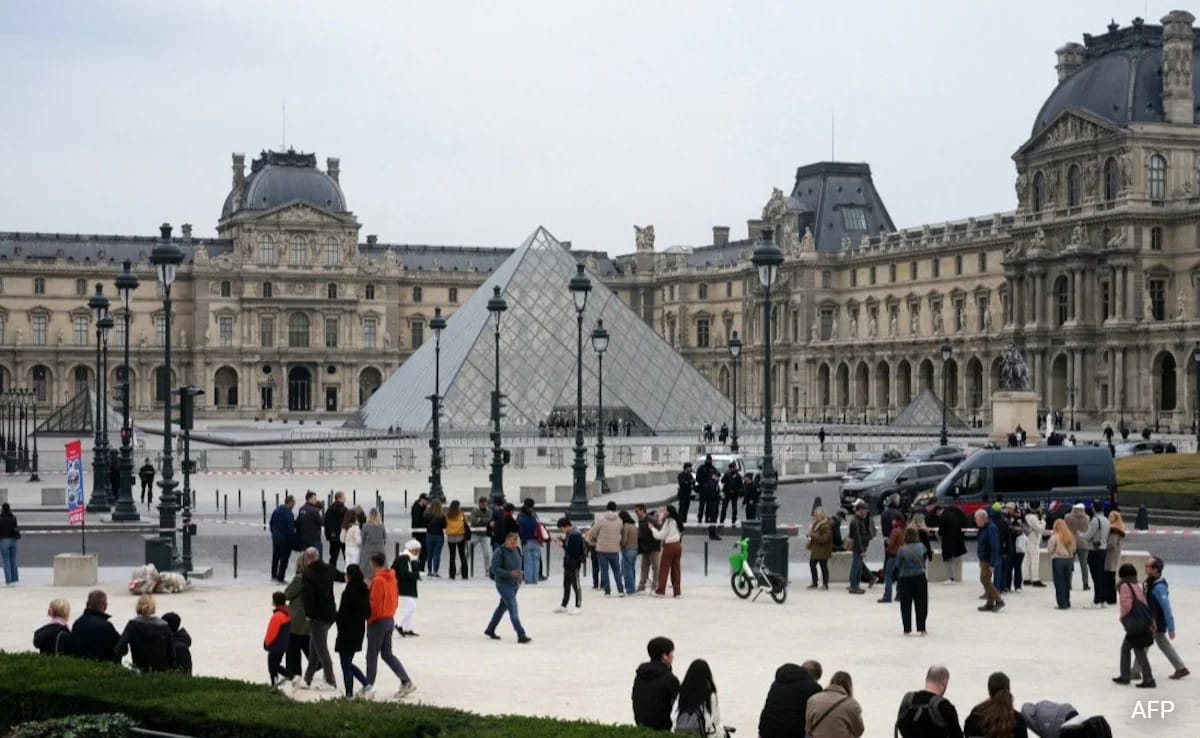
France: An investigation into the October crown jewels heist at the Louvre has revealed that the thieves narrowly escaped capture, with just 30 seconds separating them from police arrival. The damning report, commissioned by the culture ministry, was presented to the French Senate's Culture Commission on Wednesday.
The investigation uncovered multiple security failures that facilitated the audacious daylight robbery. Only one of two security cameras near the break-in point was operational at the time. The museum's security control room lacked sufficient screens to monitor footage in real-time. Additionally, poor coordination resulted in police initially being directed to the incorrect location after the alarm was triggered.
Commission head Laurent Lafon stated bluntly: "It highlights an overall failure of the museum, as well as its supervisory authority, to address security issues." Perhaps most frustrating was the revelation by investigation lead Noel Corbin that "Give or take 30 seconds, the Securitas guards or the police officers in a car could have prevented the thieves from escaping."
Corbin emphasized that several preventative measures could have thwarted the theft of the estimated $102 million in jewels, which remain missing. These include a modern CCTV system, more robust glass in the door that thieves cut through with angle grinders, and improved internal coordination.
The report revealed that multiple security vulnerability studies had been presented to Louvre management over the past decade. A 2019 audit by Van Cleef & Arpels experts specifically identified the riverside balcony—the exact entry point used by the thieves—as a weak spot that could be accessed using an extendable ladder.
Corbin confirmed that current Louvre director Laurence des Cars had been unaware of this audit, which was commissioned by her predecessor, Jean-Luc Martinez. "The recommendations were not acted on and they would have enabled us to avoid this robbery," Corbin stated, noting a concerning lack of coordination between the two government-appointed administrators.
Police believe they have apprehended all four perpetrators, who escaped on high-powered motorcycles after completing the heist in the Apollo Gallery in approximately 10 minutes.
Wednesday's revelations likely intensify pressure on des Cars, the first woman to lead the institution, who was appointed by President Emmanuel Macron in 2021. Questions continue regarding whether the break-in could have been prevented and why the world's most-visited museum appeared inadequately protected.
France's lower house of parliament is conducting its own investigation, while des Cars and Martinez are scheduled to testify before senators next week.
Last month, France's state auditor criticized the museum for implementing security upgrades at a "woefully inadequate pace," prioritizing "high-profile and attractive operations" over essential protection measures.
Guy Tubiana, a senior police officer serving as security advisor at the culture ministry who participated in the investigation, told senators he was "stunned" by his findings. "There was a succession of malfunctions that led to catastrophe but I never would have thought the Louvre could have so many malfunctions," he remarked.
Louvre staff plan to strike on Monday, demanding management address what they perceive as understaffing and overcrowding issues at the museum, which welcomed 8.7 million visitors last year.
Further compounding the institution's troubles, the museum disclosed over the weekend that a late November water leak had damaged between 300 and 400 journals, books, and documents in the Egyptian department.
Source: https://www.ndtv.com/india-news/30-more-seconds-and-louvre-thieves-would-have-been-caught-investigation-9785679