
India's Strategic Autonomy: Jaishankar Defends Russia Relations Amid US Trade Tensions
- Date & Time:
- |
- Views: 42
- |
- From: India News Bull
New Delhi:
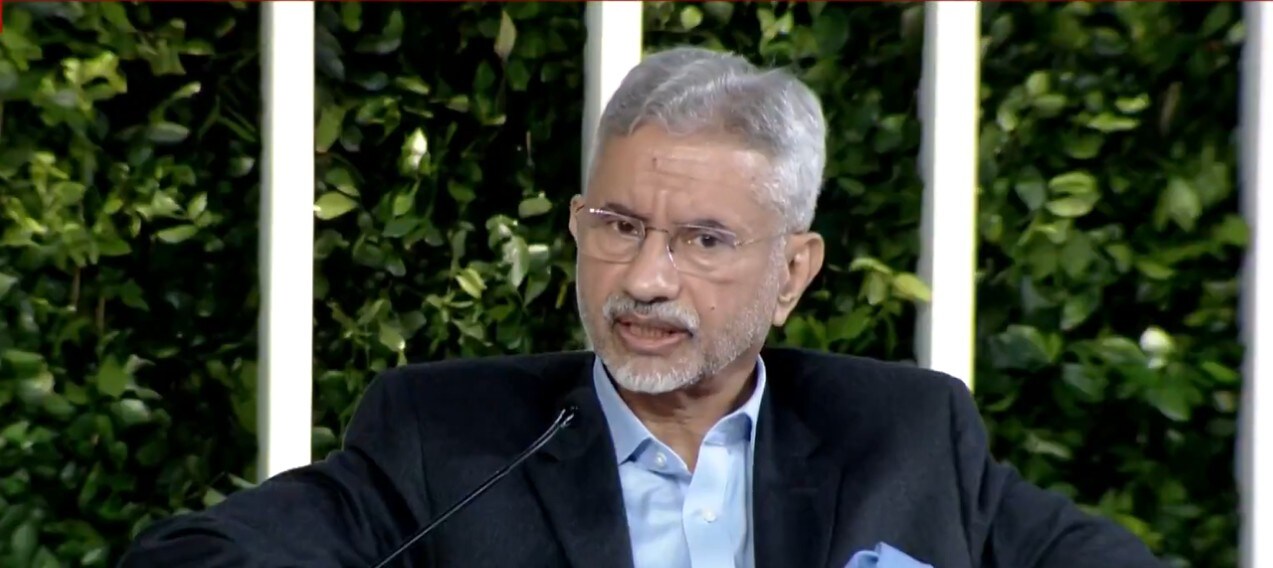
External Affairs Minister S Jaishankar described the India-Russia partnership as among the "steadiest big relationships" in the past 70-80 years during an interactive session on Saturday. He emphasized that President Vladimir Putin's recent visit to New Delhi focused on "reimagining" bilateral ties with greater emphasis on economic cooperation.
Speaking at the Hindustan Times Leadership Summit, Jaishankar rejected suggestions that Putin's visit could hinder India's trade negotiations with the US. "I disagree. Everyone knows India maintains relations with all major countries worldwide," he stated firmly.
"For any country to expect a veto or influence over how we develop our relations with others is not reasonable," Jaishankar added when questioned about potential impacts on US-India trade deal discussions.
The minister reaffirmed India's commitment to strategic autonomy, stating, "We've always made it clear that we have multiple relationships and freedom of choice. I cannot imagine why anybody would expect otherwise."
Jaishankar acknowledged that trade has become central to the Trump administration's focus, more so than previous US governments. "We recognize this and are prepared to address it, but on reasonable terms," he clarified.
Emphasizing his diplomatic philosophy, he stated, "For those who think diplomacy means pleasing others—that's not my view. Diplomacy is about defending national interests."
Currently, US-India relations face significant challenges after Washington imposed a 50 percent tariff on Indian goods, including 25 percent levies related to Russian crude oil procurement. Both nations are negotiating a potential trade deal.
"We believe there can be a mutually beneficial agreement for our respective trade interests, though negotiations will be demanding given the implications for livelihoods in India," Jaishankar explained.
"When considering a trade agreement with the US, we must be extremely judicious about our position and what we offer. The interests of workers, farmers, small businesses, and the middle class are paramount," he emphasized.
Regarding President Putin's recent two-day India visit, Jaishankar highlighted the importance for a "big" and "rising" country like India to maintain productive cooperation with key global players in accordance with its freedom of choice.
"India-Russia relations have been among the steadiest big relationships in a world that has witnessed numerous ups and downs over the past 70-80 years," he noted, contrasting this stability with Russia's fluctuating relationships with China, the US, and Europe.
Jaishankar observed that while some aspects of any relationship naturally develop more than others, the economic dimension of India-Russia ties had not kept pace. "For various reasons, Russia viewed the West and China as primary economic partners. We perhaps had a similar perspective. Putin's visit was largely about addressing this gap."
The minister identified key outcomes from Putin's visit, including a mobility agreement enabling Indians to access work opportunities in Russia more seamlessly, and a substantial joint venture on fertilizers—particularly significant as India is the world's second-largest fertilizer importer after Brazil.
On India-China relations, Jaishankar reiterated that peace along the border remains a prerequisite for good bilateral ties. "Beyond border issues, there are concerns about trade, investment, competition, subsidies, fairness, and transparency. We're working through these challenges, some easier than others."
Addressing Pakistan, Jaishankar stated that many of India's problems stem from Pakistan's military establishment, referencing its support for terrorist groups. He advised against hyphenating India with Pakistan, noting the clear differences in capabilities and reputation between the two nations.
Regarding Bangladesh, the minister affirmed India's position as a well-wisher that supports democratic processes. When asked about former Bangladesh Prime Minister Sheikh Hasina's status in India, he noted, "She arrived here under specific circumstances that will factor into her future. Ultimately, she must make her own decisions."
Source: https://www.ndtv.com/india-news/india-russia-ties-among-steadiest-globally-s-jaishankar-9762253