
BJP's Ideological Dilemma: Reconciling Integral Humanism with India's Constitutional Framework
- Date & Time:
- |
- Views: 48
- |
- From: India News Bull
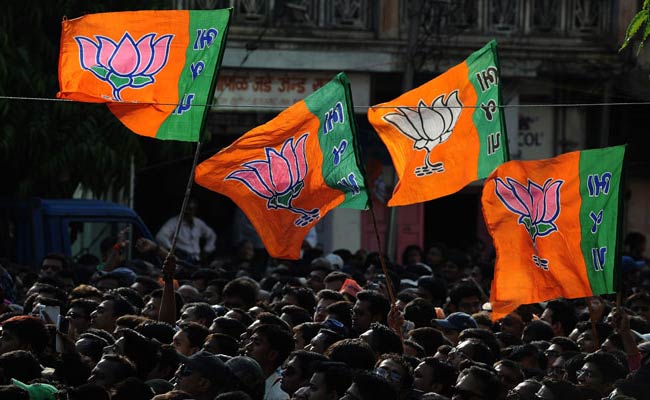
On November 26, now celebrated as Constitution Day, Prime Minister Narendra Modi penned a letter to citizens across India.
In his message, Modi urged citizens to prioritize constitutional duties in their minds. "To carry out our duties, it becomes imperative to put in our full capability and dedication in every task. Every action of ours should strengthen the Constitution and further national goals and interests."
The Prime Minister highlighted how the power of the Constitution enabled someone from humble and economically disadvantaged origins like himself to serve as head of government continuously for over 24 years. Modi's constitutional reaffirmation comes as opposition parties, led by Congress, have campaigned claiming the Bharatiya Janata Party (BJP) government intends to amend India's founding document that took effect in 1950.
However, the BJP might need to consider amending its own constitution, as its fundamental philosophy - Integral Humanism - conflicts with the country's Constitution. This extends beyond disagreements about the Preamble.
The controversy intensified during summer when Dattatreya Hosabale, general secretary of the Rashtriya Swayamsevak Sangh (RSS), the BJP's ideological mentor, called for debate on removing 'socialist' and 'secular' from the Preamble. After public outcry, Union Law Minister Arjun Ram Meghwal clarified in Parliament that the government had "no current plans" to remove these terms, which were inserted via the 42nd amendment in 1976 during the Emergency. While the Sangh Parivar rejects socialism as a political ideology for India, it contends that constitutional secularism derives from western thought and has been distorted into minority appeasement.
RSS and BJP leaders often reference BR Ambedkar, the Constitution's chief architect, arguing against including 'socialism' and 'secularism' in the Preamble. During Constituent Assembly debates, Ambedkar maintained these terms weren't explicitly needed, as secularism was embedded in fundamental rights and socialism in directive principles.
At a 2017 lawyers' gathering, RSS chief Mohan Bhagwat discussed Constitutional morality with former President Pranab Mukherjee. When Mukherjee stated morality is legality, Bhagwat questioned if the reverse held true, advocating that India's legal system needed liberation from foreign influences. The RSS believes Hindu 'dharma' is inherently secular and that India represents a Hindu Nation.
The Representation of People's Act, governing Indian elections, compels the BJP to embrace socialism and secularism in its party constitution. Its stated commitments include a "Gandhian approach to socio-economic issues leading to the establishment of an egalitarian society free from exploitation" and 'positive secularism' (Sarva Dharma Samabhav - equal respect for all religions). Notably, the RSS expressed dissatisfaction when the BJP formed in 1980 with Gandhian Socialism as its guiding philosophy, which was replaced five years later with Deendayal Upadhyaya's Integral Humanism.
This change created an ideological contradiction the party must confront if it fully embraces Upadhyaya's charter. While the party constitution commits to nationalism, Upadhyaya's second lecture analyzing western ideals suggests nationalism conflicts with world peace and socialism militates against democracy. Yet he doesn't reject these concepts outright, instead adapting them to suit 'Bharatiya culture,' emphasizing socialism's importance given India's socioeconomic disparities. Upadhyaya advocated for free education, healthcare, and universal employment.
Upadhyaya also objected to federalism, preferring a unitary structure and arguing that India's Constitution required amendment for growth. "We made our Constitution federal, whereby what we have adopted in practice, we have rejected in principle," he stated.
Several states, particularly from Southern India, already protest that federalism is retreating as the Centre encroaches on state powers. Opposition-ruled states including Kerala, West Bengal, and Tamil Nadu accuse governors of acting as Central agents interfering with state institutions. Similarly, the farm laws controversy was viewed as central overreach into state subjects, while centrally sponsored schemes requiring significant state financial contributions remain contentious in Centre-state relations.
Given that growth ('vikas') is the BJP's daily mantra, maintaining status quo suggests the party merely pays lip service to Integral Humanism. "It is after all our responsibility to fulfil the dreams envisioned by the framers of our Constitution," Modi stated in his letter. Perhaps it's time for the BJP to abandon Integral Humanism, particularly since Upadhyaya wasn't among the Indian Constitution's framers.
(Dinesh Narayanan is a Delhi-based journalist and author of 'The RSS And The Making Of The Deep Nation'.)
Disclaimer: These are the personal opinions of the author
Source: https://www.ndtv.com/opinion/constitution-vs-constitution-9757564