
Boris Yeltsin's Historic 1993 Visit: Reshaping India-Russia Relations After Soviet Collapse
- Date & Time:
- |
- Views: 30
- |
- From: India News Bull
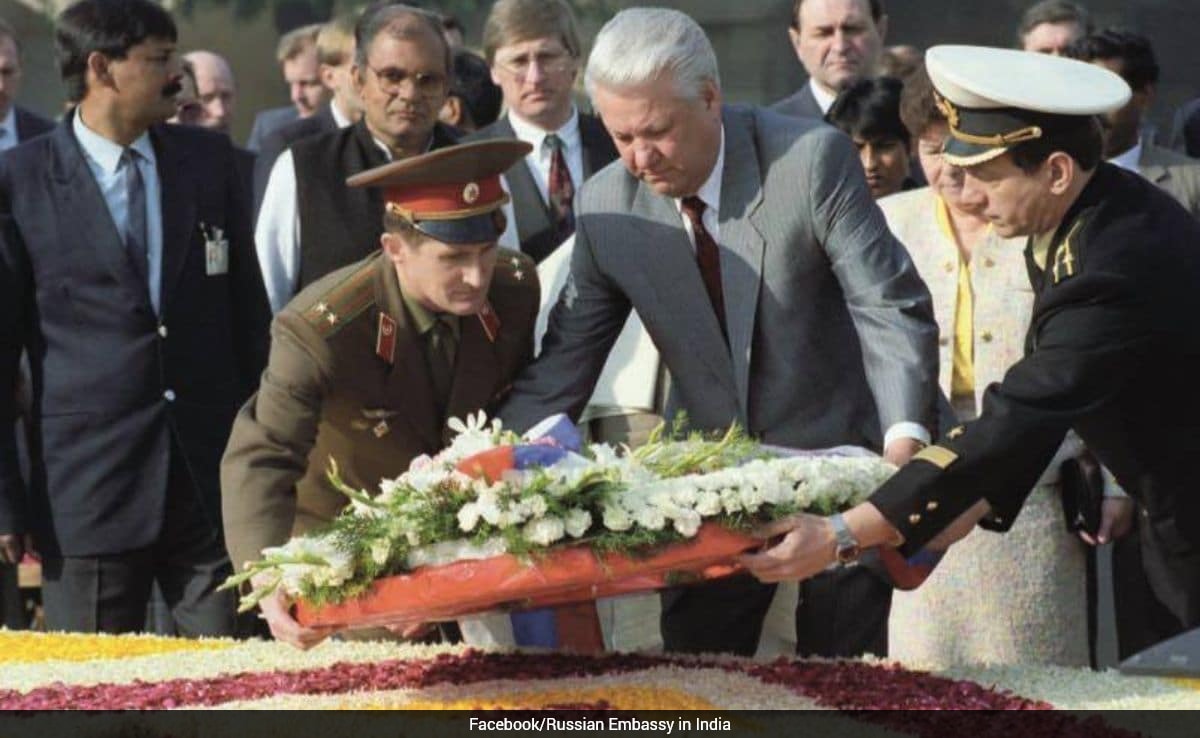
Boris Yeltsin's historic visit to India took place in 1993, marking a significant turning point in bilateral relations between the two nations.
The Cold War era had witnessed friendly and cooperative ties between India and the Soviet Union, but the USSR's collapse in 1991 created a diplomatic vacuum in a newly unipolar world. This left India searching for stability in its foreign relations. The 1993 visit by President Yeltsin to India represented a crucial moment when both countries needed to reaffirm their mutual support.
Under President Yeltsin's leadership, Russia was actively working to reconstruct its international relationships. His journey to India constituted a major diplomatic initiative in this direction. This visit effectively launched a new chapter in India-Russia relations. Yeltsin was a transformative figure who guided his nation through the challenging transition from the Soviet system toward a more open society.
Prior to departing Moscow in 1993, Yeltsin told the press, "We are eager to build strong ties with India, but without playing the India card against the United States and China as happened during the Cold War".
A cornerstone of the visit was the signing of a comprehensive 20-year friendship treaty designed to modernize bilateral relations following the Soviet Union's dissolution. This agreement drew inspiration from the earlier 1971 Indo-Soviet Treaty of Peace and Friendship.
A notable difference in the new treaty was the absence of the military assistance provision. While the 1971 agreement stipulated that "If India or the USSR was attacked by another country, the other side would help or support them," this clause was deliberately omitted from the 1993 treaty.
The economic dimension presented significant challenges after 1991, as Russia inherited all Soviet financial commitments, including India's substantial debt to the former USSR. This complicated matters because the previous rupee-ruble trade system had become obsolete, and Russia sought repayment in hard currency, particularly US dollars.
Both nations found themselves in need of mutual support—Russia required financial resources, while India sought continued Russian defense supplies. In preparation for the presidential visit, Yeltsin dispatched his Deputy Prime Minister, Vladimir Shumeik, to India a week earlier, resulting in a new economic and trade agreement.
Yeltsin's discussions with Prime Minister PV Narasimha Rao primarily addressed overcoming financial debt issues, stabilizing defense collaboration, and rebuilding diplomatic trust. This visit established the foundation for all subsequent India-Russia interactions in the post-Soviet landscape.
The 1993 agreement included provisions for India to repay ten percent of its approximately Rs 30,000 crore debt over a 12-year period, with the remainder to be settled through 33 installments of Indian exports. Additionally, major defense contracts were finalized, including the purchase of Su-30 fighter aircraft and upgrades for MiG-21 planes.
Following the Soviet collapse, the Indian armed forces faced shortages of spare parts in the defense sector, as reported by LA Times at that time. During Yeltsin's visit, both countries agreed to establish factories for manufacturing these critical spare components.
Source: https://www.ndtv.com/world-news/boris-yeltsin-when-a-russian-president-visited-india-for-the-first-time-9754703