
Supreme Court Imposes 15-Minute Argument Limit on Delhi Riots Case Lawyers: Time Management in High-Profile UAPA Trial
- Date & Time:
- |
- Views: 38
- |
- From: India News Bull
New Delhi:
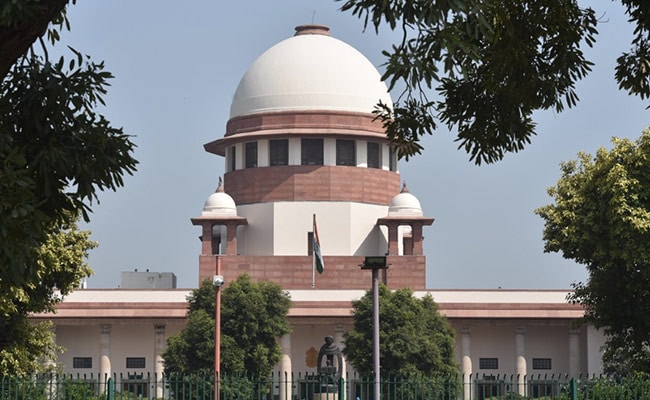
The Supreme Court on Wednesday instructed lawyers representing the accused in the February 2020 Delhi riots case to limit their oral arguments to 15 minutes, noting the necessity of establishing a time schedule for proceedings.
Justices Aravind Kumar and N V Anjaria stated that any clarifications from Additional Solicitor General S V Raju responding to the arguments presented by the defense lawyers would be restricted to 30 minutes.
"Arguments have been advanced by both sides substantially. We are of the view that a time schedule is required to be fixed. Oral arguments shall not exceed 15 minutes each and clarification by ASG will not exceed 30 minutes," the bench declared, scheduling the next hearing for December 9.
The court additionally mandated that defense attorneys submit permanent addresses for their clients.
During Tuesday's proceedings, activist Sharjeel Imam expressed distress while seeking bail, objecting to being characterized as a "dangerous intellectual terrorist" without having undergone a complete trial or received any conviction.
"I would like to say that I am not a terrorist, as I have been called by the respondent. I am not an anti-national as called by the State. I am a citizen of this country, a citizen by birth and I have not been convicted for any offence till now," argued senior advocate Siddhartha Dave, who represents Imam.
Dave maintained that Imam's arrest on January 28, 2020, preceded the communal violence in northeast Delhi, and that his speeches alone could not constitute "criminal conspiracy" in connection with the riots case.
Senior advocate Kapil Sibal, appearing for Umar Khalid, emphasized that his client was not in Delhi when the riots erupted in February 2020, arguing that Khalid cannot be kept incarcerated "as if to say that I will punish you for your protests".
Representing Gulfisha Fatima, senior advocate Abhishek Singhvi informed the court that the activist has spent nearly six years in detention, describing the trial delay as "astonishing and unprecedented".
The Delhi Police strongly contested the bail applications of Khalid, Imam, and others, asserting that the February 2020 riots were not spontaneous but rather an "orchestrated, pre-planned and well-designed" attack on India's sovereignty.
Khalid, Imam, Fatima, Meeran Haider, and Shifa Ur Rehman face charges under the stringent Unlawful Activities (Prevention) Act (UAPA) and provisions of the Indian Penal Code (IPC) for allegedly masterminding riots that resulted in 53 deaths and over 700 injuries.
The violence erupted amid widespread demonstrations against the Citizenship (Amendment) Act (CAA) and the National Register of Citizens (NRC).
Source: https://www.ndtv.com/india-news/restrict-arguments-to-15-minutes-top-court-to-lawyers-in-delhi-riots-case-9743451