
Opinion | Why An Anti-Immigrant Rally In London Should Worry Indians
- Date & Time:
- |
- Views: 49
- |
- From: India News Bull
The chants that reverberated through central London during a massive anti-immigration demonstration this past weekend - "They've taken our jobs" and "We want our country back" - were not simply abstract slogans aimed at nameless foreigners. For immigrant communities, including Britain's well-established and highly successful Indian diaspora, these words serve as a disturbing reminder that acceptance can never be taken for granted. Throughout history, we have witnessed repeatedly how even the most integrated minority groups may find their citizenship treated as provisional when populist anger is weaponized against them.
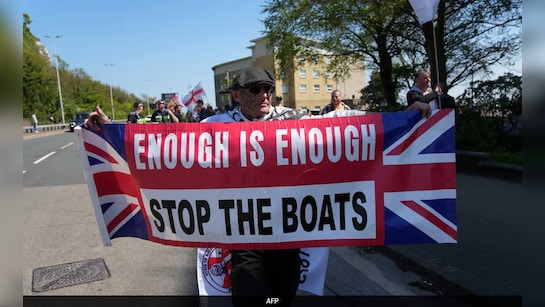
The Indian community has become interwoven into the fabric of British society. Third-generation British Indians are flourishing across politics, business, medicine, law, and culture. The community has produced a Prime Minister, several Cabinet ministers, and countless contributors to public life. Yet historical precedents warn that prosperity and integration offer no guarantee of security. In 1972, Uganda's Indian population - affluent, professional, and vital to the economy - were expelled overnight by Idi Amin. Their passports and contributions meant nothing once populist rage merged with authoritarian decree. Similarly, Chinese-Indonesians in 1998, despite being citizens for generations, saw their businesses looted and women attacked when economic crisis transformed them into convenient scapegoats. France's North African and Muslim citizens continue to face systematic discrimination despite being third-generation citizens. Even Britain itself is culpable: the Windrush scandal saw Caribbean families who had lived and worked in the UK for decades detained, deported, and stripped of rights they believed were secure.
These historical examples should deeply concern British Indians today. While celebrated as a model minority, their success provides no protection from regular racist attacks. Should political sentiments shift, they could easily become targets for blame. The spectacle of 150,000 people marching through London in one of the largest anti-immigrant demonstrations since Brexit should serve as an urgent warning. The "Unite the Kingdom" rally was not a marginal outburst but rather a mainstream expression of anger, drawing participants from across England - many ordinary citizens rather than dedicated right-wing activists. When such sentiments grow more pronounced, no family heritage or citizenship document can protect those suddenly deemed "outsiders."
The imagery from the rally was telling: flags draped over shoulders, signs denouncing migrants, and chants suggesting Britain had been stolen. For the organizers, this represented "defending free speech" and "standing up for Britain." For many attendees, it expressed something more visceral - a sense of decline, displacement, and dispossession. These emotions have been nurtured for years by political rhetoric that frames migration not as an opportunity to be managed but as a threat requiring containment. Now these sentiments have erupted onto the streets at an alarming scale.
Significantly, the rally attracted not only British populists but international provocateurs as well. Elon Musk appeared via video screen, warning about the "woke mind virus" and declaring ominously that "violence is coming - you either fight back or you die." His irresponsible words gave the event both global visibility and ideological weight. Alongside him were far-right figures from across Europe who see Britain's unrest reflecting their own agendas. This was not merely a British protest but part of a broader continental pattern.
Similar currents flow throughout Europe today. Germany's Alternative für Deutschland has gained momentum despite controversy. Marine Le Pen's National Rally appears poised to reshape French politics. Giorgia Meloni governs Italy as a hard-right prime minister, normalizing rhetoric once considered extreme. Geert Wilders in the Netherlands has revitalized his political fortunes with uncompromising nationalist appeals. Even Scandinavia, previously thought immune, has drifted rightward. For years, Britain was believed to have exhausted its populist energy on Brexit. However, the London march demonstrates that those forces are evolving into something new: less focused on leaving Europe and more on closing borders and reasserting identity.
For Prime Minister Keir Starmer, the implications are troubling. Barely a year into his leadership, he confronts a movement that is both anti-immigration and anti-establishment. Labour, despite its electoral victory, is being portrayed as part of a detached political elite, disconnected from everyday concerns. Starmer's cautious centrism has neutralized Conservative attacks but risks creating an ideological vacuum. Into that void step figures like Nigel Farage and Tommy Robinson, the primary organizer of Saturday's massive demonstration.
Immigration stands at the center of this controversy. It functions as both symbol and scapegoat, channeling broader anxieties about a Britain perceived as broken. The economic reality is complex: Britain depends on managed migration and foreign investment to offset economic stagnation, reportedly worsened by Brexit. Yet legitimate grievances exist. Illegal Channel crossings continue despite repeated promises to "stop the boats." Local councils and taxpayers must accommodate asylum seekers in entire hotels, generating resentment in communities already under pressure. Weekly protests against such arrangements rarely make headlines, reinforcing the perception that ordinary voices are ignored. Against this backdrop, chants of "They've taken our jobs" gain traction not just through propaganda but because people feel unheard.
Labour faces the challenge of navigating a delicate balance. Starmer cannot simply dismiss these grievances, nor can he indulge them without betraying Britain's pluralist principles. He must develop a narrative of national renewal - where migration is responsibly managed, communities receive investment, and patriotism is inclusive rather than exclusionary. Yet his government appears reactive, addressing crises rather than providing leadership. Leading in this context requires conviction and imagination, not merely competent administration.
If these sentiments remain unchecked, what seems fringe today may govern tomorrow. Already, Nigel Farage is being discussed in private conversations as a potential future prime minister. Dismissing this possibility means forgetting how quickly discontent solidifies into ideology and ideology into power.
This explains why the Indian diaspora - and all immigrant communities - should not view the London rally as a distant spectacle. Indians in Uganda, Chinese-Indonesians, Caribbean Britons - history demonstrates how fragile belonging becomes when political winds shift direction.
The London chants should therefore alarm Britain's minority communities. "We want our country back" is not a slogan that examines passports. It thrives on blurring distinctions between citizen and outsider, between third-generation immigrant and recent arrival. Its power lies in treating difference itself as threatening.
Starmer must heed this warning. If he allows the anti-immigrant right to control the terms of debate, he risks legitimizing a political approach that could eventually target Britain's most integrated minorities. Leadership responsibility involves not only managing discontent but preventing today's anger from transforming into tomorrow's authoritarianism.
Britain has weathered similar challenges before. In the 1930s, fascist marches were defeated not only in the streets but by leaders who constructed a post-war consensus around welfare and fairness. In the 1970s and 1980s, the National Front was marginalized through policing and through community and cultural mobilization against racism. Today's danger is more subtle - not swastikas and jackboots but the normalization of rhetoric portraying immigrants as invaders. Countering this requires more than condemnation; it demands a vision of Britain's future that is both pluralist and robust.
The "Unite the Kingdom" rally represents not an anomaly but a symptom of deeper problems - economic stagnation, cultural anxiety, and political disillusionment. For Starmer, the challenge is immediate and personal: if he cannot speak convincingly to those feeling abandoned, if he cannot demonstrate empathy domestically and authority internationally, he risks surrendering ground to less scrupulous forces. Starmer needs to embrace his political and ideological convictions while taking action to address public grievances.
At stake is more than his leadership - it's the future of Britain's political identity. Will it remain a liberal democracy embodying inclusion, or will it drift toward the populist nationalism sweeping across Europe? For the Indian diaspora, the stakes are equally clear. Mistaking their success for immunity would mean forgetting history's harshest lessons. Britain needs leadership offering renewal rather than retreat. Until that emerges, demonstrations like "Unite the Kingdom" will become not the exception but the pattern of things to come.
(Syed Zubair Ahmed is a London-based senior Indian journalist with three decades of experience with the Western media)