
Opinion | India's New Maritime Laws Deliver Ease Of Business Only For A Few
- Date & Time:
- |
- Views: 55
- |
- From: India News Bull
As a Member of Parliament representing Thiruvananthapuram - a coastal Kerala constituency home to the innovative Vizhinjam port project - I might have been expected to welcome Parliament's recent passage of three major maritime laws. These reforms ostensibly aim to modernize India's ports and shipping sector, a domain directly relevant to my constituents and our national economic aspirations.
However, I find myself balanced between cautious optimism and significant concern. The legislative package - the Indian Ports Act, 2025; the Merchant Shipping Act, 2025; and the Coastal Shipping Act, 2025 - passed through Parliament during a disrupted session without meaningful debate or proper scrutiny. For legislation that fundamentally reshapes India's maritime governance architecture, this procedural shortcut is troubling. Even more concerning is the actual content of these reforms.
The Indian Ports Act, 2025 replaces century-old legislation from 1908 - a seemingly overdue update. India's maritime regulation has indeed fallen behind global standards, fragmented across jurisdictions and outdated regarding shipping finance, offshore operations, and international conventions. The new Act promises coherence, sustainability, and business-friendly reforms - objectives I fully support.
Yet the means of achieving this coherence raises serious concerns. The Act centralizes authority through the Maritime State Development Council, chaired by the Union Minister of Ports. This body can issue binding directives to States, effectively subordinating regional priorities to central initiatives like Sagarmala and PM Gati Shakti. Rather than embodying cooperative federalism, this Act risks reducing States to mere implementers of centrally dictated visions.
As a representative of a coastal state with distinct maritime ambitions, I worry about the erosion of fiscal autonomy and planning flexibility. Kerala's port development strategy may not always align with national logistics corridors or industrial clusters. Yet under the new framework, state maritime boards cannot revise their approaches without Central approval - this represents prescription rather than partnership.
The concerns extend beyond federalism. Clause 17 of the Ports Act prohibits civil courts from adjudicating port-related disputes, instead directing parties to internal committees constituted by the very authorities they may be challenging. This absence of independent judicial review undermines investor confidence and establishes a concerning precedent for regulatory opacity.
The Merchant Shipping Act, 2025 presents similar contradictions. It appropriately modernizes vessel registration, safety standards, environmental obligations, and liability frameworks. It expands definitions to include offshore drilling units and non-displacement crafts while strengthening oversight of maritime training institutes. These are positive developments. However, hidden in the details is a concerning dilution of ownership safeguards.
Under previous legislation, Indian-flagged vessels required full Indian ownership. The new Act permits partial ownership by Overseas Citizens of India and foreign entities, with thresholds to be determined later through executive notification. This ambiguity is problematic - it grants the government unrestricted power to redefine ownership standards without parliamentary oversight, potentially transforming India into a flag-of-convenience jurisdiction where foreign interests control vessels flying the Indian flag.
Moreover, the Act mandates registration of all vessels regardless of size or propulsion method. This universal requirement may overwhelm small operators, particularly in the fishing industry, with administrative burdens they're ill-equipped to handle. Effective reform should enable participation, not create exclusionary barriers.
The Coastal Shipping Act, 2025 completes this legislative trinity. Its stated purpose is strengthening cabotage rules to ensure only Indian-flagged vessels engage in domestic coastal trade. While this intention is sound, the implementation is flawed. The Director General of Shipping receives extensive discretionary power to license foreign vessels based on vague criteria like "national security" or "alignment with strategic plans." These broad provisions invite arbitrary application and undermine the very cabotage protections the Act purports to establish.
Small operators, especially in coastal communities like those I represent, will disproportionately suffer. Mandatory voyage and cargo reporting requirements are introduced without clear guidance on data usage or protection. The centrally mandated National Coastal and Inland Shipping Strategic Plan risks marginalizing local voices and priorities.
A concerning pattern emerges across all three laws: executive empowerment at the expense of states, small operators, and institutional checks. Ownership thresholds, licensing regulations, dispute resolution mechanisms - many critical details are deferred to future notifications rather than being clearly defined in the legislation. This weakens democratic accountability and creates uncertainty for stakeholders.
Let me emphasize: I do not oppose reform. India's maritime sector requires modernization. We must attract investment, enhance competitiveness, and align with global standards. However, reform must be grounded in democratic process, federal balance, and regulatory clarity. It should empower - not marginalize - the actors who sustain our maritime economy.
As a parliamentarian, I find the absence of deliberation deeply troubling. These laws passed without referral to a standing committee, without engagement with coastal states, and without consultation with industry stakeholders. In a sector as complex and consequential as maritime governance, such legislative haste represents imposition rather than reform.
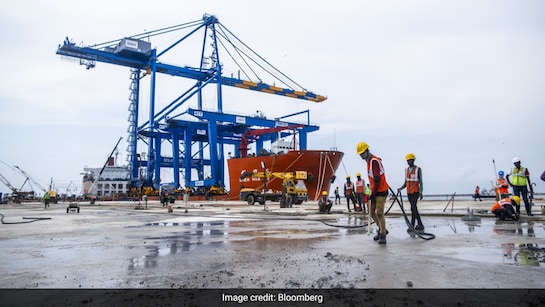
The Vizhinjam port in my constituency, developed and operated by Adani Ports, symbolizes India's maritime ambition. Designed as a cutting-edge trans-shipment hub and gateway to global trade, it represents genuine progress. The pride I experienced watching a young woman from a fishing family operating one of the world's largest cranes using computer controls from an air-conditioned room is difficult to articulate. This represents progress that delivers both people's benefits and profitability.
Yet its success depends not merely on infrastructure but on fair, transparent, and inclusive policies, and on a governance framework that balances national strategy with regional considerations.
These new maritime laws may represent a beginning. However, unless amended to restore federal balance, clarify regulatory standards, and ensure judicial independence, they risk facilitating business advantages for select interests while undermining cooperative governance foundations. India's maritime future deserves better - as do its coastal communities.
(Shashi Tharoor has been a Member of Parliament from Thiruvananthapuram, Kerala, since 2009. He is a published author and a former diplomat.)
Disclaimer: These are the personal opinions of the author