
Record-Breaking Decline in Farm Fires: Punjab and Haryana Report Lowest Stubble Burning Incidents in 5 Years
- Date & Time:
- |
- Views: 51
- |
- From: India News Bull
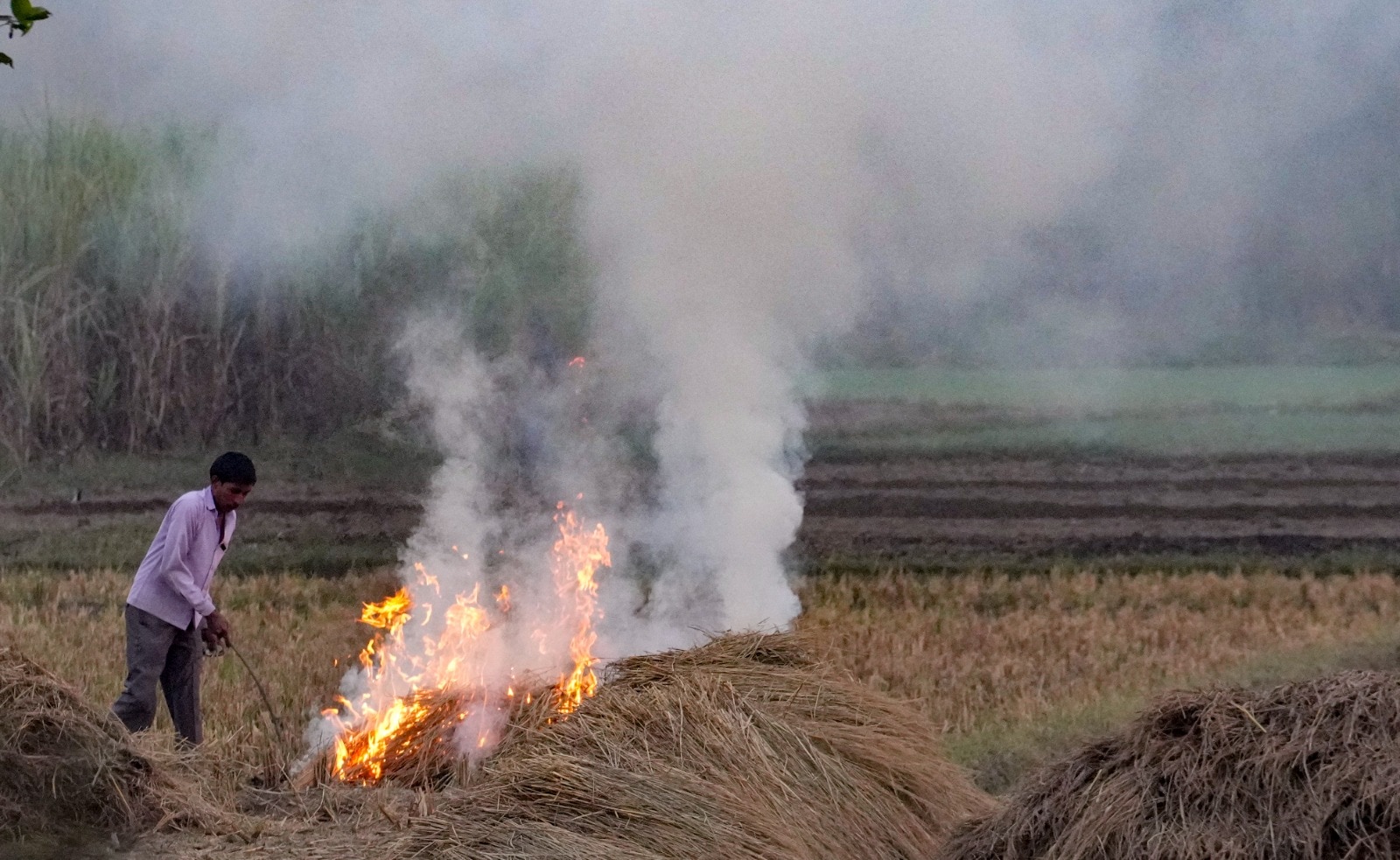
Haryana has reported a significant 53 percent reduction in farm fires compared to 2024 figures.
New Delhi:
The Commission for Air Quality Management (CAQM) announced on Monday that farm fire incidents in Punjab and Haryana have reached their lowest recorded levels during the 2025 paddy harvesting season. Between September 15 and November 30, Punjab documented 5,114 cases while Haryana reported only 662 incidents.
Punjab's farm fire numbers have shown remarkable improvement, decreasing 53 percent from 2024 levels, 86 percent from 2023, 90 percent from 2022, and 93 percent compared to 2021 figures.
Similarly, Haryana demonstrated substantial progress with a 53 percent reduction from 2024, 71 percent from 2023, 81 percent from 2022, and an impressive 91 percent drop since 2021. This represents the most significant decline since the CAQM began monitoring state-specific crop residue management efforts.
According to a statement from the CAQM, this consistent reduction in farm fires has minimized the potential "episodic" deterioration of Delhi-NCR's air quality that would typically result from stubble-burning contributions during this season.
The commission attributes this success to several factors: state and district-specific action plans, widespread adoption of crop residue management machinery, strict enforcement protocols, expanded ex-situ utilization of paddy straw, and innovative approaches such as biomass-based energy generation, industrial use of paddy straw in boilers, bio-ethanol production, and mandatory co-firing practices in thermal power plants and brick kilns.
The CAQM further highlighted that ongoing coordination between state agriculture departments, district administrations, and the commission itself enabled prompt corrective actions whenever significant fire events were detected.
Ground-level monitoring by flying squads, the specialized Parali Protection Force, field officers, and teams stationed throughout hotspot districts, complemented by targeted farmer awareness campaigns, also contributed significantly to this improvement.
A dedicated CAQM monitoring cell has been established in Chandigarh to provide year-round oversight of paddy stubble management and related pollution activities, the statement added.
The CAQM expressed optimism that with continued implementation of strengthened measures and the ultimate goal of eliminating paddy straw burning across Punjab, Haryana, and the NCR, further improvements in the region's air quality can be expected in coming years.
Source: https://www.ndtv.com/india-news/farm-fires-in-punjab-haryana-lowest-in-5-years-air-quality-body-9733333