
Supreme Court Asks Centre to Consider Re-entry of Illegally Deported Pregnant Indian Woman on Humanitarian Grounds
- Date & Time:
- |
- Views: 35
- |
- From: India News Bull
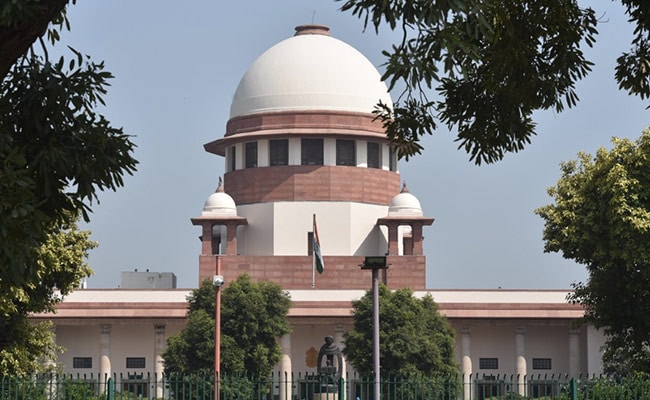
The Supreme Court on Monday urged the Centre to consider permitting entry to a pregnant woman and her child who were deported to Bangladesh earlier this year, citing humanitarian grounds while suggesting she could remain under surveillance.
Chief Justice Surya Kant and Justice Joymalya Bagchi requested Solicitor General Tushar Mehta to seek instructions regarding allowing the woman, who is in an advanced stage of pregnancy, to cross the Indo-Bangladesh border at Malda, West Bengal.
"We need two days to seek instructions on this matter. We understand the court's humanitarian concerns and will examine the situation," Mehta stated while requesting additional time.
Senior advocate Sajay Hegde, representing Bhodu Sheikh, father of Sonali Khatun, informed the court that they were waiting at the Bangladesh border to enter India. He emphasized that their deportation to Bangladesh had been ruled illegal as they are Indian citizens.
The court suggested that the Centre might consider allowing the pregnant woman and her child to enter India under surveillance in a hospital to prevent further complications.
Hegde requested that if the pregnant woman is permitted entry, her husband should also be allowed into India rather than being left behind.
The Supreme Court scheduled the matter for hearing on December 3 and directed Mehta to obtain instructions on the issue.
The bench was considering the Centre's challenge to the Calcutta High Court's September 26 order, which had invalidated the government's decision to deport Sonali Khatun and others to Bangladesh, declaring it "illegal."
On September 26, the high court overturned the Centre's deportation of Sonali Khatun and Sweety Bibi, residents of West Bengal's Birbhum district, along with their families after classifying them as "illegal immigrants."
The high court ordered the Centre to ensure the six deported citizens were returned to India within a month and rejected the government's request for a temporary stay on the order.
The high court had issued two orders regarding a habeas corpus petition filed by Bhodu Sheikh, who claimed his daughter Sonali Khatun, in advanced pregnancy, along with her husband Danesh Sheikh and five-year-old son from Murarai in Birbhum, were detained in Delhi and forced into Bangladesh.
A similar petition from the same Birbhum neighborhood by Amir Khan alleged that his sister Sweety Bibi and her two children were detained by Delhi Police from the same area and pushed across the border.
The petitioners claimed these families, who had worked as daily wage earners in Delhi's Rohini area for over two decades, were apprehended by AN Katju Marg police on June 18 on suspicion of being Bangladeshis and subsequently pushed across the border on June 27.
The deportees were reportedly then arrested by Bangladesh police.
The high court noted that the Centre stated in its affidavit that the Foreigner Regional Registration Office (FRRO) in Delhi, as a civil authority, had been repatriating illegal migrants from Bangladesh according to instructions issued by the Union Home Ministry in a memo dated May 2, 2025.
The memo outlines deportation protocols, stating that for Bangladesh/Myanmar nationals identified as unauthorized residents in any state or Union territory, an inquiry must be conducted by the concerned state government or UT before initiating deportation proceedings.
In its ruling, the high court observed that "the proceeding for deportation was conducted in hot haste" by authorities and violated provisions of the memo.
"The detainees have their relations residing in the State of West Bengal...the kind of overenthusiasm in deporting the detainees, as visible herein, is susceptible to misunderstanding and disturbs the judicial climate in the country," the order had stated.
Source: https://www.ndtv.com/india-news/consider-letting-deported-pregnant-woman-enter-india-top-court-to-centre-9732652