
Opinion | India's Brains Meet Japan's Tech - And Why China Should Be Worried
The Tokyo summit will be remembered as the moment when two of Asia's most important democracies moved beyond talking about technological sovereignty to actually building it.
- Date & Time:
- |
- Views: 62
- |
- From: India News Bull
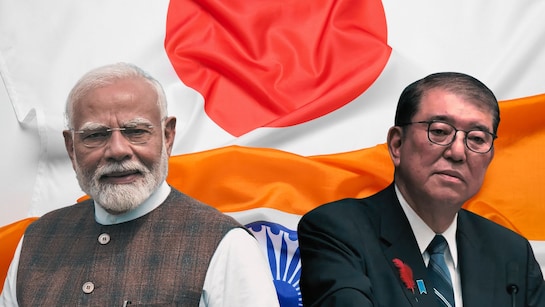
"Japan is a technology powerhouse and India is a talent powerhouse," Prime Minister Modi stated during his Tokyo visit yesterday, succinctly capturing why the 15th India-Japan Annual Summit could be this year's most strategically significant meeting in Asia. The summit produced more than diplomatic pleasantries—it established a comprehensive blueprint for technological collaboration that strengthens strategic cooperation in vital sectors while reshaping Indo-Pacific power dynamics.
The summit's timing is particularly significant. As global power competition intensifies and technological independence becomes increasingly linked to national security, Modi and Japanese Prime Minister Shigeru Ishiba have established a partnership bridging democratic values and strategic imperatives. Their joint statement, "Partnership for Security and Prosperity of our Next Generation," indicates this collaboration targets long-term strategic positioning in an increasingly contested global landscape.
Beyond traditional defense arrangements, the newly signed Joint Declaration on Security Cooperation represents a significant evolution from Japan's typically conservative approach to defense partnerships. With India allocating ₹621,940 crore ($74 billion) to defense in 2024-25—making it the world's fourth-largest defense spender—substantial financial resources support these commitments. The agreement enhances military cooperation through more frequent tri-service joint exercises, establishing operational foundations for deeper technological collaboration.
This defense partnership's focus on next-generation capabilities rather than legacy systems makes it particularly noteworthy. Reports indicate Japan has invited India to join the sixth-generation Global Combat Air Programme (GCAP), potentially marking Japan's most significant shift from its post-war security doctrine. Such collaboration would reduce development costs for both nations while creating technological capabilities to counterbalance Chinese military modernization.
The defense cooperation extends beyond conventional military hardware into cybersecurity, space technology, and emerging technologies. The agreement creates a framework to address cyber threats, acknowledging that modern warfare increasingly operates in digital domains. This cyber cooperation is especially relevant given the integration of artificial intelligence into defense systems, where India's software expertise and Japan's hardware capabilities create natural synergies.
India's experience managing complex borders and asymmetric threats, combined with Japan's island defense requirements and advanced sensor technologies, creates opportunities for developing specialized defense systems addressing unique regional challenges. The partnership's emphasis on joint research and development ensures both nations will benefit from collaborative innovations, reducing dependence on external suppliers for critical defense technologies.
Perhaps the summit's most strategically significant outcome is the launch of the India-Japan AI Cooperation Initiative. This initiative advances collaboration in Large Language Models (LLMs), training, capacity building, and startup support to develop a trustworthy AI ecosystem. The emphasis on "trustworthy AI" is notable—signaling both nations' understanding that the AI race concerns not just capabilities but creating systems democracies can rely upon.
PM Modi's invitation to PM Ishiba for India's AI Impact Summit in February next year represents strategic planning for technological competition with enormously high stakes. As Modi expressed, together the two countries can "lead this century's tech revolution" in green energy, next-generation mobility, and logistics infrastructure.
The AI partnership builds on genuine complementarity. India's strengths in software development, algorithm creation, and digital services perfectly complement Japan's expertise in robotics, precision manufacturing, and advanced hardware systems. Indian IT professionals and researchers have been at the forefront of global AI development, while Japanese corporations like Sony, SoftBank, and Toyota have pioneered AI applications in robotics, autonomous vehicles, and industrial automation.
What makes this collaboration particularly challenging to Chinese AI dominance is its focus on creating end-to-end solutions. While China has achieved significant AI advances through massive data collection and state-directed investment, the India-Japan partnership offers an alternative model based on innovation, private sector dynamism, and democratic values. Their joint focus on startups and business ecosystem development indicates both nations understand that AI leadership requires nurturing entrepreneurial innovation, not just government investment.
The AI initiative also addresses a critical vulnerability in both nations' strategic positions. China's dominance in certain AI applications has created dependencies that both India and Japan recognize as strategic liabilities. By developing joint AI capabilities, they create alternatives that reduce reliance on potentially hostile systems while building indigenous capabilities enhancing their strategic autonomy.
The semiconductor dimension of the partnership, formalized through the Digital Partnership 2.0 agreement, may prove to be the most economically transformative aspect of yesterday's summit. Japan's commitment to achieving JPY 10 trillion ($68 billion) in private investment in India over the next decade demonstrates the ambitious scale of this cooperation.
Modi, describing Japan as an "important partner in charting India's growth story," noted that "from metros to manufacturing, from semiconductors to startups, our partnership has been strong." This continuity matters—the semiconductor partnership builds on existing investment flows rather than starting anew. Japan's bilateral trade with India reached $22.85 billion in FY24, with Japanese cumulative investment hitting $43.2 billion since 2000, making Japan India's fifth-largest FDI source.
The semiconductor collaboration addresses a critical chokepoint in global technology supply chains. Japan possesses advanced capabilities in semiconductor equipment manufacturing, specialized materials, and precision components—the "picks and shovels" of the chip industry. India offers semiconductor design expertise, a growing ecosystem of chip design companies, and manufacturing capabilities that could serve both domestic and export markets.
PM Modi's visit to a semiconductor factory in Sendai highlights "the futuristic dimension of our cooperation in areas like emerging technologies, AI and semiconductors." This collaboration aims to create a complete ecosystem spanning design, fabrication, assembly, and testing—comprehensive capabilities essential for technological sovereignty in an era where semiconductor supply chains have become weapons of geopolitical competition.
The timing of this semiconductor partnership is particularly strategic given ongoing global chip shortages and increasing weaponization of technology in great power competition. By developing joint capabilities in this sector, India and Japan can reduce dependence on potentially hostile supply chains while building technological depth enhancing their strategic autonomy.
What makes yesterday's agreements particularly significant is how they fit into the broader strategic landscape of Indo-Pacific competition. The joint statement's emphasis on commitment to a "free, open, peaceful, prosperous and rules-based" Indo-Pacific directly challenges China's vision of regional order.
The defense, AI, and semiconductor cooperation creates technological capabilities serving multiple strategic purposes. These enhance both nations' individual capabilities while creating joint assets strengthening their positions in other partnerships, particularly within the QUAD framework. The partnership doesn't require either nation to abandon other relationships; instead, it creates capabilities strengthening both in all their strategic interactions.
The economic security dimension, formalized through the Economic Security Initiative, recognizes that modern strategic competition operates across multiple domains simultaneously. The Memorandum of Cooperation in Critical Minerals creates mechanisms for joint exploration, processing technology development, and coordinated stockpiling—essentially building strategic depth in materials as important as oil was in the 20th century.
The real test of yesterday's summit will be implementation. Previous India-Japan summits have sometimes promised more than delivered, but the detailed framework agreements suggest both sides have learned from past experiences. The creation of specific institutional mechanisms provides concrete pathways for turning political commitments into operational capabilities.
The success of this partnership will ultimately be measured not in diplomatic communiqués but in joint defense systems enhancing deterrence, AI innovations creating new industries, and semiconductor capabilities reducing strategic dependencies. Japanese process discipline will significantly support Indian startups and SMEs as they grow in strength and performance. If executed effectively, the India-Japan partnership in these critical sectors could become a model for democratic middle powers collaborating to maintain strategic autonomy amid great power competition.
The Tokyo summit will be remembered as the moment when two of Asia's most important democracies moved beyond discussing technological sovereignty to actively building it.
(Subimal Bhattacharjee advises on technology policy issues and is former country head of General Dynamics)
Disclaimer: These are the personal opinions of the author