
Japan To Invest 10 Trillion Yen In India Over Next Decade
Japan on Friday set an investment target of 10 trillion yen (approx Rs 60,000 cr) in India over a decade, and the two sides sealed a raft of big-ticket pacts, including a framework for defence ties and a 10-year roadmap
- Date & Time:
- |
- Views: 68
- |
- From: India News Bull
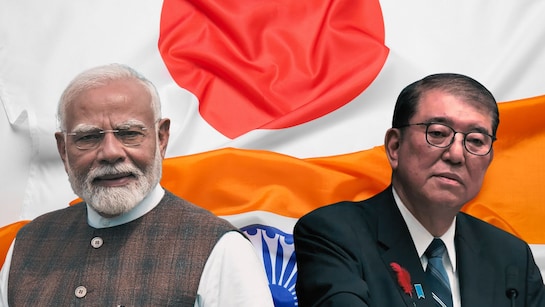
Japan announces massive investment plan and expanded partnership with India following leadership summit.
Tokyo:
Japan announced on Friday an ambitious target to invest 10 trillion yen (approximately Rs 60,000 crore) in India over the next decade, while both nations signed multiple significant agreements, including a framework for defense cooperation and a comprehensive 10-year economic partnership roadmap—strategic decisions made against the backdrop of global trade uncertainty caused by U.S. policies.
These enhanced measures to strengthen the India-Japan special strategic and global partnership were revealed after high-level talks between Indian Prime Minister Narendra Modi and his Japanese counterpart, Shigeru Ishiba.
The two nations formalized 13 important agreements and documents, launching several transformative initiatives including an economic security architecture designed to enhance supply chain resilience in critical sectors such as semiconductors, clean energy, telecommunications, pharmaceuticals, critical minerals, and emerging technologies.
"We both agree that as two major economies and vibrant democracies, our partnership is very important not only for our two countries, but also for global peace and stability. Strong democracies are natural partners in shaping a better world," Modi stated while standing alongside Ishiba.
"Today, we have laid a strong foundation for a new and golden chapter in our Special Strategic and Global Partnership. We have set a roadmap for the next decade." "We have set a target of 10 trillion yen investment from Japan in India over the next ten years," Modi added.
Among the agreements, one focuses on facilitating the mobility of 50,000 skilled and semi-skilled Indian workers to Japan over the next five years, while another promotes collaboration in digital public infrastructure.
The decade-long roadmap encompasses several key pillars including economic security, mobility, ecological sustainability, technology and innovation, health, people-to-people exchanges, and cooperation between Indian states and Japanese prefectures.
Another crucial agreement aims to advance cooperation in supply chain resilience for critical minerals, covering development of processing technologies, joint investments for exploration and mining, and efforts toward stockpiling these vital resources. A separate declaration was signed to promote hydrogen and ammonia projects.
The agreements also included a joint crediting mechanism and cooperation between the Indian Space Research Organisation and Japan Aerospace Exploration Agency for a collaborative lunar-polar exploration mission.
This document establishes terms and conditions for India-Japan cooperation on the Chandrayaan-5 mission, materializing what officials described as a "landmark" collaboration.
The comprehensive defense framework will provide for security cooperation addressing contemporary challenges, according to the Ministry of External Affairs (MEA).
Both prime ministers expressed serious concern regarding the situation in the East China Sea and South China Sea, amid China's increasing military presence in these strategic waters.
Modi and Ishiba reiterated their firm opposition to any unilateral actions threatening safety and freedom of navigation and overflight, or attempts to change the status quo through force or coercion.
"They shared their serious concern over the militarisation of disputed features. They reaffirmed that maritime disputes must be resolved peacefully and in accordance with international law, in particular the UN Convention on the Law of the Sea (UNCLOS)," stated a joint statement.
Considering the current global situation, both leaders committed to upholding the international order based on rule of law and reaffirmed their dedication to a free and open Indo-Pacific that is peaceful, prosperous and resilient.
Modi and Ishiba strongly condemned the terrorist attack in Pahalgam, noting the UN Security Council's Monitoring Team report mentioning The Resistance Front (TRF) in connection with the attack.
"Prime Minister Modi further explained that the TRF had claimed responsibility for the attack. Prime Minister Ishiba noted this with concern. They called for the perpetrators, organisers, and financiers of this reprehensible act to be brought to justice without any delay," the joint statement emphasized.
In his media remarks, Modi highlighted that Japanese technology combined with Indian talent creates a winning formula.
"While we are working on high-speed rail at one end, we are also making rapid progress in areas like ports, aviation, and shipbuilding under the next generation mobility partnership," he said.
"We also have shared interests in the areas of defence and maritime security. We have jointly decided to further strengthen our cooperation in the fields of defence industry and innovation," he concluded.