
"His Greatest Ire...": Expert On Why Trump Tariffs Target India, Not China
As India makes it clear that it is ready to stand up to US President Donald Trump's tariffs offensive, a South Asia analyst has explained the link between the ceasefire that paused the India-Pakistan conflict after the Pahalgam terror attack
- Date & Time:
- |
- Views: 65
- |
- From: India News Bull
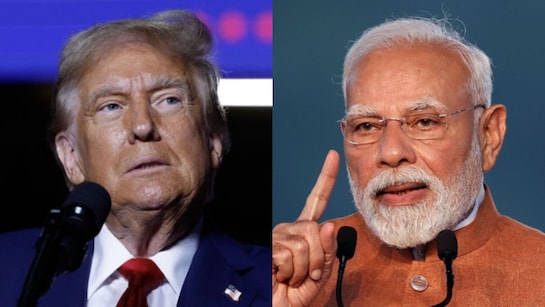
Prime Minister Modi stated in Parliament that "no world leader" requested India to halt Operation Sindoor
New Delhi:
As India demonstrates its readiness to confront US President Donald Trump's tariff offensive, a South Asia analyst has elucidated the connection between the ceasefire that suspended the India-Pakistan conflict following the Pahalgam terror attack and Washington's recent tariff measures.
Michael Kugelman, who directs the South Asia Institute at the US-based Wilson Center, shared his insights with news agency ANI after Trump announced a supplementary 25 percent tariff on Indian exports, elevating the total tariff burden to 50 percent.
Trump declared this was a 'penalty' for India's ongoing purchases of Russian crude oil. New Delhi, which has consistently maintained that it acquires Russian oil to ensure energy security for its citizens, has described the US action as "unfair, unjustified, and unreasonable". The Ministry of External Affairs also expressed that it was "extremely unfortunate" that the US imposed additional tariffs on India for actions that numerous other countries are taking, including India's neighbor, China.
#WATCH | Washington DC | On being asked about why President Trump is not punishing China, but targeting India (for Russian imports), Director of the South Asia Institute at the Wilson Center, Michael Kugelman says, "...China has not stood out there and refused to let President… pic.twitter.com/OkDwhu7S7t
— ANI (@ANI) August 6, 2025
When questioned why Trump's tariff offensive hasn't yet targeted China, Kugelman responded, "China has not stood out there and refused to let President Trump take credit for his role in the ceasefire. China has not had its leader have a long conversation with Trump on the phone and essentially dictate to him what's right and what's wrong. These are things that happened with India.
"So I think that's why perhaps President Trump would reserve some of his greatest ire on the trade and tariff front for India and for the Indian government. Indeed, it's a double standard. It's hypocritical, whatever you want to say," he explained.
The South Asia expert was referencing Trump's repeated assertions that he mediated the ceasefire between India and Pakistan after New Delhi initiated Operation Sindoor in response to the Pahalgam terror attack. Despite Trump's claims, India has maintained that the decision to agree to a ceasefire was made at Pakistan's request and not due to US intervention. Prime Minister Narendra Modi has informed Parliament that "no world leader asked India to stop its military operation".
New Delhi's position effectively thwarted the US President's attempt to claim credit for ending hostilities between the neighboring countries.
Pakistan, conversely, has expressed gratitude for US intervention and has been rewarded with a trade agreement.
The tension in India-US relations has also suspended ongoing negotiations for a trade pact after India declined to grant increased access to its key sectors, such as agriculture, to protect farmers. Sending a forceful message after Trump's tariffs took effect, Prime Minister Modi stated, "The interest of farmers is our top priority. India will never compromise with the interests of its farmers, livestock holders, and fishermen. And I know that I will have to pay a huge price for this personally, but I am ready. India is ready, for the sake of the country's farmers, fishermen and livestock holders."
Kugelman has characterized the current India-US tension as the "worst crisis" the bilateral relationship has faced in over two decades and suggested it could have a "damaging impact". Nevertheless, he indicated that the broad relationship between the two nations can endure "shocks".
"I think this is the worst crisis that the relationship has faced over the last two decades of strategic partnership... I would argue that there is potential for this relationship to be salvaged, not just because of the natural, shared interests and the strategic convergences, but this is a relationship that is multifaceted and has many different areas of cooperation that play out on parallel tracks and have the insulation to withstand shocks to the broader relationship," he concluded.