
Opinion | Trump's Dilemma: Why US Wants India To Be Strong, But Not Too Strong
As the architecture of international order shifts, India will neither be contained nor co-opted. It will assert its priorities, and demand equal footing. The faster the US comes to terms with this, the more fruitful the US-India partnership can be.
- Date & Time:
- |
- Views: 64
- |
- From: India News Bull
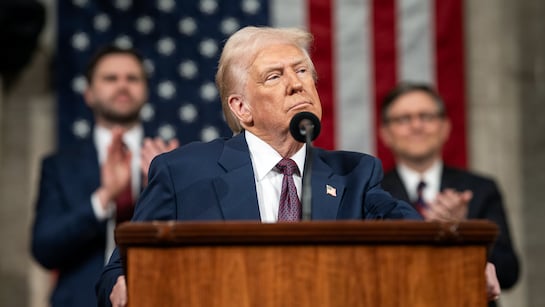
President Trump's recent imposition of 25% tariffs on Indian exports, coupled with threats of penalties for Russian defense and energy imports, has escalated tensions between America and India. While presented as protecting American manufacturing, this move reveals deeper friction between two major powers navigating a multipolar world – one where India now stands as a strategic pole rather than merely following another nation's lead.
The Emerging Quadripolar Order
This conflict's significance extends beyond immediate economic impacts to highlight evolving global power dynamics. Recent scholarship describes an emerging "quadripolar" world with authority distributed among the United States, China, Russia, and India. In this framework, unilateral leadership fades as consensus becomes increasingly elusive. Trump's tariff strategy illustrates both the limitations of transactional diplomacy and America's persistent hegemonic tendencies in foreign relations.
For India, these punitive measures intersect strategic autonomy with economic resilience. New Delhi consistently rejects binary alignments – whether in military alliances, digital partnerships, or trade systems dominated by a single power. Its ongoing purchases of discounted Russian oil and advanced systems like the S-400 reflect sovereign necessity rather than ideological preference. This independent stance has characterized India's foreign policy for decades, from Cold War neutrality to contemporary Global South leadership. India's External Affairs Ministry recently highlighted Western hypocrisy by pointing out continued US and European trade with Russia in critical sectors despite their public support for Ukraine.
Beyond Partnership
This very independence frustrates American policymakers. Regardless of administration, Washington increasingly views India not just as a China-containment partner but as a potential challenger itself. The contradictions are evident: America wants India strong but not too powerful; it desires partnership but only on its own terms. India, however, refuses subordination – one reason it declined F-35 fighter jets, beyond financial considerations. Such procurement would create dependencies incompatible with India's indigenous defense development vision.
The tensions exposed by these tariffs will likely strengthen India's foreign policy autonomy. Near-term, this may drive pragmatic cooperation with Russia and China – not as ideological allies but as tactical partners resisting American overreach. This "Troika" cooperation manifests in BRICS forums and discussions on energy and payment infrastructure. India's recent engagement with ASEAN and African partners further diversifies its global economic posture away from US-centricity.
Strategic Recalibration
Yet India isn't completely pivoting eastward. New Delhi maintains significant investment in its Washington partnership, particularly regarding defense interoperability and technology transfer. However, India makes clear this relationship cannot demand obedience. Moving beyond 20th-century alliance frameworks, India now pursues convergence without dependence, cooperation without compliance.
The tariff dispute demonstrates that US-India tensions stem not merely from temporary irritants but structural competition. Both nations are democratic, diverse, and ambitious, yet their global order visions differ fundamentally. Washington still perceives itself as the indispensable power, while India positions itself as an indispensable alternative, particularly for the Global South it increasingly represents internationally.
A Strategic Misstep?
In this context, punitive trade measures represent not just poor policy but strategic miscalculation. They risk alienating a crucial partner capable of balancing China in Asia while accelerating India's determination to shape rather than follow global rules – from digital governance to payment systems to climate negotiations. India's development of sovereign technology platforms, resistance to data colonialism, and advocacy for multipolar international norms reflect this broader trajectory.
As global order realigns, India will neither be contained nor co-opted. It will contest, assert, and demand equality. This exemplifies what a quadripolar world requires from every great power: accepting others who don't perfectly align with one's preferences. Washington's recognition of this reality could enhance US-India partnership.
Conversely, treating rising powers as dependents rather than equals risks losing partners and driving them toward rivals – not from ideological alignment but pragmatic necessity. In today's geopolitical landscape, this constitutes more than diplomatic error; it represents geopolitical failure.
(S. Yash Kalash is a senior fellow at the Centre for International Governance Innovation and an expert in strategy, public policy, digital technology and financial services. He has a distinguished track record advising governments and the private sector on emerging technologies.)
Disclaimer: These are the personal opinions of the author