
Opinion | UK-India Trade Pact: The Empire, Finally, Shakes An Equal Hand
For 200 years, Britain shaped India's trade rules to its advantage - plundering raw materials, taxing salt, killing industries in the name of "free markets". Now, as post-Brexit UK shops around for friends, India has become a prized dance partner.
- Date & Time:
- |
- Views: 61
- |
- From: India News Bull
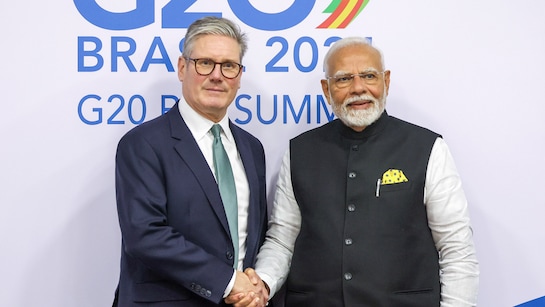
Seven years represent a significant span in political circles and an even more substantial timeframe in diplomatic relations. This marks the duration since Prime Minister Narendra Modi last visited London. The era of massive diaspora stadium gatherings has now faded into memory. Today's mission carries a more subdued, precise, and strategic focus. No fanfare or chanting crowds - just the subtle sounds of official documentation being processed. What Modi and British Prime Minister Keir Starmer are about to accomplish transcends symbolism; it enters the realm of historical significance.
India and the UK have essentially finalized a Free Trade Agreement (FTA) that took nearly three years to negotiate. Consider it an extended, sometimes awkward courtship now culminating in a formal union. The engagement announcement came on May 6 during a call between both prime ministers, with legal refinements ongoing since then. The agreement represents Britain's most ambitious post-Brexit trade deal and India's first FTA with a G7 nation. This economic alliance between the world's fifth and sixth largest economies potentially marks the moment when colonial narratives begin being rewritten by the formerly colonized. Though perhaps not outwardly spectacular, the deal's incremental benefits will serve both nations during prosperous and challenging times.
The economic interconnection tells a story of two nations shedding historical identities. Post-EU Britain actively seeks new global trading partners. Meanwhile, India - increasingly confident and assertive - negotiates boldly with international counterparts. If Britain once extracted Indian wealth, today Indian companies generate over 91 billion pounds in UK revenue while providing more than 100,000 jobs. Nearly a thousand Indian firms operate throughout Britain, while the UK has invested over $36 billion in India. India's investment into the UK reaches $20 billion. These figures represent substantial mutual economic engagement.
This relationship extends far beyond a single dimension. The bilateral connection was elevated to a Comprehensive Strategic Partnership in 2021. Since then, both sides have actively prepared for deeper collaboration. The leaders have met twice within the past year - most recently at the G7 summit in June - and Modi's current London visit, his fourth as Prime Minister, is expected to finalize more than just trade arrangements. The itinerary includes discussions with business leaders, high-ranking policymakers, and an audience with King Charles - comprehensive diplomacy at its finest.
What benefits does the FTA offer India? Access to British markets for textiles, seafood, gems and jewelry - sectors employing millions while showcasing excellence globally. For Britain, opportunities to sell more Scotch whisky, automobiles and cosmetics to India's rapidly expanding middle class. Indian consumers may soon enjoy Glenfiddich and Mini Coopers without prohibitive taxation. This creates mutual advantages, though domestic car manufacturers and local spirits producers may face challenges. Trade invariably produces some economic displacement.
India maintained firm boundaries where essential. Pressure existed to liberalize the agricultural sector - a demand Americans have similarly pushed. However, Delhi remained resolute. Memories of WTO conflicts, prolonged battles for food security provisions, and farmer protests remain vivid. India's agricultural sector transcends economic statistics; it represents a social commitment. Employing over 40% of the population, no trade advantage justifies destabilizing this critical sector.
Immigration negotiations proved challenging, with Britain traditionally restrictive. India sought increased professional mobility, but London - sensitive to migration politics - offered limited visa pathways for skilled workers like chefs, yoga instructors, and select IT professionals. Nevertheless, India secured a significant victory: social security exemptions for short-term workers, preventing double taxation for overseas employment - a practical but valuable achievement.
Beyond commerce and immigration, cooperation extends into new areas. The University of Southampton recently established a Gurugram campus - the first foreign university under India's revised education policy, with other UK institutions planning similar initiatives. Defense and security collaboration continues growing; healthcare partnerships like the Oxford-AstraZeneca (Covishield) vaccine and co-developed malaria vaccine demonstrate scientific collaboration's life-changing potential. British financial support for India's renewable energy initiatives further indicates that this partnership transcends conventional trade, showing how democracies can jointly create future possibilities.
The United States casts a significant shadow over these developments. President Trump has repeatedly announced an "imminent" India-US trade agreement, suggesting Delhi's readiness for American imports. However, behind-the-scenes negotiations reveal complications. Washington seeks comprehensive access to India's agricultural sector, automotive components, and tariff structures. India offers measured cooperation but resists complete market opening - at least currently.
The potential rewards are substantial. India-US bilateral trade reached $190 billion last year, with Modi and Trump previously targeting $500 billion. However, implementation remains challenging. Trump's proposed 27% tariff on Indian goods (announced in April) has been temporarily suspended but remains a concern. Delhi understandably hesitates to build long-term relationships with unpredictable partners.
This makes the UK agreement particularly significant. It signals to Washington, Brussels, Tokyo, Canberra and others that India engages globally on its own terms. India has already secured FTAs with Australia and the UAE, while EU negotiations continue. Canadian discussions occurred until political disagreements disrupted progress. India now confidently establishes its international commercial framework.
Historical irony pervades these developments. For two centuries, Britain shaped India's trade regulations for colonial advantage - extracting resources, taxing necessities, and undermining local industries under "free market" pretenses. Now post-Brexit Britain pursues partnerships with India as a valued counterpart. The symbolism is evident: a formerly colonized nation now negotiates terms while the former empire awaits final agreements. The empire now seeks deals rather than dominance.
The human dimension remains central to these economic statistics. The 1.8 million Indian diaspora in Britain forms a vibrant connection - culturally, economically, and emotionally. They work as healthcare professionals, technology specialists, restaurant proprietors, retailers, and media representatives. They send remittances to India, develop businesses, and exemplify the possibilities when borders don't restrict ambition. Every trade agreement, business conference, and visa program impacts their daily lives.
Though Modi's visit may be brief, its implications are extensive. The handshake between Modi and Starmer transcends diplomatic protocol - it represents historical recalibration, power rebalancing, and revising colonial narratives. While legal details require finalization and clauses need refinement, the message is clear: India isn't merely participating in the global economy but helping reshape it.
As official signatures formalize this agreement, remember that trade encompasses more than commercial exchange. It incorporates identity, aspiration, historical memory, competition, influence, and vision - all embedded within contractual language. The East India Company's founders would understand this reality.
Within these carefully crafted terms, a new relationship chapter begins - this time between equals.
(Syed Zubair Ahmed is a London-based senior Indian journalist with three decades of experience with the Western media)
Disclaimer: These are the personal opinions of the author