
Opinion | Can India And China Be 'Frenemies'?
The question that needs to be asked is, why did China risk a major conflict with India? What was the purpose? Was it to force India to come to the negotiating table, as Mao had told his generals in October 1962?
- Date & Time:
- |
- Views: 60
- |
- From: India News Bull
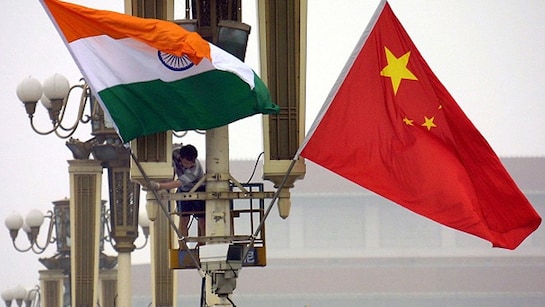
Mao Zedong once stated that "China and India were not destined for eternal conflict. They could experience a prolonged peace, but China needed to employ force to 'push' India back to diplomatic discussions," as Henry Kissinger recounts in his book On China. Following the initial offensive against India in 1962, Mao unexpectedly halted operations, puzzling his military commanders. He clarified that his intention was never to defeat India completely; rather, the military campaign was designed to bring India to the negotiating table.
Since that conflict, border tensions with Chinese forces have occurred, though never escalating to full-scale warfare. The most recent confrontation happened in Galwan, where soldiers from both nations clashed. During Operation Sindoor, Lieutenant General Rahul Singh, deputy chief of armed forces, described a unique situation where Indian forces were battling two adversaries simultaneously on a single frontier. He explained that alongside Pakistan, China was engaging in hostilities against India, utilizing the conflict zone to test its weaponry—actions that clearly constituted enemy behavior.
Why Did China Risk Confrontation?Viewed more broadly, one could easily conclude that China was conducting a proxy war for Pakistan. This represented a conflict between two civilizational powers proud of their historical legacies. China had no apparent reason to involve itself in a dispute between traditional rivals who had already engaged in five wars. Yet it did so. The critical question is: why would China risk significant conflict with India? What was the objective? Was it to compel India to return to negotiations, as Mao had informed his generals in October 1962?
In this context, the significance of Indian Foreign Minister S. Jaishankar's social media post showing him shaking hands with Chinese President Xi Jinping becomes apparent. Although Jaishankar was in Beijing for the SCO foreign ministers' meeting, his message suggested deeper implications: "Apprised President Xi of the recent development of our bilateral ties. Value the guidance of our leaders in that regard." Such diplomatic language seems remarkable considering China's recent aggressive actions, including attempts to hinder India's economic growth by restricting exports of rare earth materials and specialized fertilizers, while also withdrawing over three hundred Foxconn engineers. Does this indicate that despite the Modi government's assertive rhetoric, India has recognized China's immense global importance and the advantages of maintaining peaceful relations?
China Seeks AlliesIt's essential to recognize that foreign policy revolves around national interests rather than friendships or personal connections. If Modi's government has decided to enhance relations with China, this represents a prudent approach. China currently stands at a pivotal juncture, transitioning from superpower status to potentially becoming the world's leading nation. It requires allies and partners in this journey.
China has achieved remarkable progress since Mao's era. During the 1970s, India and China possessed comparable economic dimensions. However, following Mao's departure, Deng's reforms transformed China dramatically. No other nation in history has demonstrated such extraordinary economic expansion in such a compressed timeframe. Within four decades, China has not only developed into a $19-trillion economy—second globally after the US—but also emerged as a technological powerhouse. Its recent breakthroughs in artificial intelligence and electric vehicles have startled Western nations, particularly the United States. The remarkable aspect is that unlike American technology, China's innovations are highly affordable. Its electric vehicle manufacturer, BYD, threatens Tesla's global position, causing concern for Elon Musk. Similarly, China's cost-effective AI solution DeepSeek poses an existential challenge to America's artificial intelligence market and technologies.
During Operation Sindoor, China also demonstrated its development of advanced military technologies capable of achieving air superiority through integrated networks of AI, sensors, and internet capabilities.
Pragmatic ConsiderationsIndia has undoubtedly progressed significantly since its 1991 economic reforms. It currently boasts the fastest growth rate and arguably ranks as the world's fourth-largest economy. However, it hasn't yet reached the $5 trillion threshold and struggles to compete with China's economic and technological capabilities. China today dominates global manufacturing, producing approximately 31.6% of worldwide manufactured goods. India remains a developing economy where 800 million citizens largely depend on government support. Its per capita income stands at just $2,878, ranking 143rd among 196 countries, while China's $25,307 places it at 70th. India's manufacturing sector remains sluggish, and despite initiatives like Make in India and Atmanirbhar Bharat, its global market contribution is merely 2.9%.
Since Xi Jinping assumed leadership, China has grown increasingly ambitious, extending its influence worldwide. It has established a substantial presence across Africa. In South Asia, it works to diplomatically encircle India from all directions. While India once took pride in its historical relationship with Russia, this dynamic has shifted. Today, Russia has become China's closest ally—Moscow's conspicuous silence during Operation Sindoor illustrates this reality. Russia recently designated Pakistan as a natural ally and partner. China's strong reaction regarding the Dalai Lama's reincarnation issue offers another signal to Indian policymakers.
The central point is that if India aims to achieve its Viksit Bharat vision by 2047, it requires peaceful borders. Establishing positive bilateral relations with China would serve India's interests, providing crucial time for economic development. If Beijing perceives India as an adversary hindering its objectives, friction becomes inevitable. Furthermore, India can no longer depend on Trump's America. A neighborly approach toward China could yield significant long-term benefits.
(The author is co-founder of SatyaHindi and author of 'Reclaiming Bharat' and 'Hindu Rashtra')
Disclaimer: These are the personal opinions of the author