
Opinion | There's Something 26/11 Mumbai Attack Can Tell Us About Trump-Munir Lunch
Now, as India threatens that 'Operation Sindoor' is far from over, US troops on its soil are a nice bit of insurance for Pakistan against Indian fury. But that also means more terrorism, not less.
- Date & Time:
- |
- Views: 57
- |
- From: India News Bull
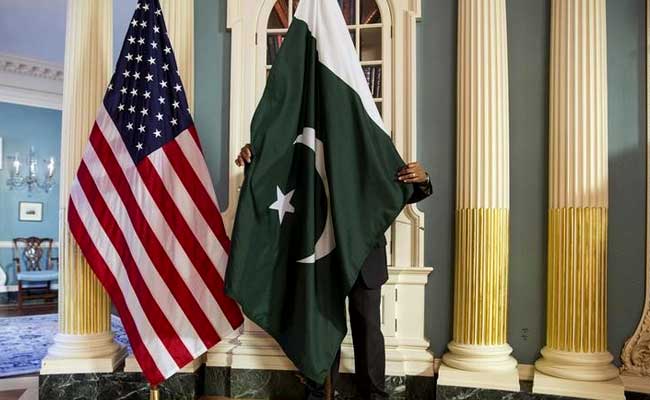
The Pakistani Field Marshal recently dined with the United States President. Whether the unpredictable American leader still intends to bring Prime Minister Modi to Washington for a meal with his problematic neighbor remains unclear. While Pakistan may celebrate this "historic" dining engagement in Washington, one must remember that dealings with a self-described transactional president never come without cost. General Asim Munir understands this reality and will likely leverage America's inevitable demands for his own agenda, potentially affecting the declared continuation of 'Operation Sindoor'.
## Historical Precedents Examining history reveals patterns in Pakistan-US relations. On December 8, 1959, President Ayub Khan, a military dictator who had seized power the previous year, awaited President Eisenhower. Khan welcomed Eisenhower as a leader of the "free world," highlighting concerns about India, the Kashmir issue, the pending Indus Water treaty, Pakistan's water dependency, and the communist threat.
Replace the Russian menace with China, and this historical briefing could be inserted into current Pakistani diplomatic files. Eisenhower expressed pleasure that "President Ayub had taken initiative...to improve relations with India," while securing agreement for a military installation in Peshawar to monitor Soviet activities.
Washington's hospitality always comes with conditions.
## Munir's Strategic Approach Munir came prepared to Washington, understanding Trump's personality. He brought a proposal to nominate Trump for the Nobel Peace Prize for supposedly preventing nuclear conflict—a proposal with little realistic chance. Nobel nominations remain confidential until finalized, and Trump's strained relationships with treaty partners make success unlikely. Meanwhile, PM Modi had to publicly reject the "peacemaker" narrative during his telephone conversation, with his Foreign Secretary reinforcing this position publicly.
Pakistan claimed this as a victory, though perhaps prematurely. Pakistani media celebrated that Munir was the first serving military chief to meet a US President. Notably, this meeting occurred with minimal participants: only Secretary of State Marco Rubio and Special Representative Steve Witcoff from the American side, with ISI Chief General Asim Malik joining Munir. No civilian officials attended.
Witcoff's presence, along with Trump's subsequent press conference, indicated Iran was a central topic. Simultaneously, the USS Nimitz carrier group joined existing naval forces in the Persian Gulf. If conflict with Iran is imminent, Pakistan will likely be asked to provide bases for launching military operations, as sea-based platforms cannot effectively support ground operations or special forces missions. Alternatively, if Trump prefers covert action against Iran's nuclear program over open warfare, Pakistan's expertise becomes valuable, given their history of intelligence operations against Iran. Prime Minister Sharif's promise of "steadfast" support carries limited weight, as his political influence continues to diminish.
The window for diplomatic solutions appears to have closed. Israel under Netanyahu remains fully committed to action. Any pause would allow Iran to complete its nuclear deterrent development. Conflict seems increasingly inevitable.
This scenario brings Pakistan into play.
## America as Munir's Protection This situation benefits Munir considerably. Unlike Ayub Khan, who despite initiating military interventions was recognized as capable and strategic, Munir has shown himself to be calculating and vindictive, having imprisoned both a Prime Minister and former ISI chief who opposed him.
Munir appears to understand historical patterns. Pakistan's only period of economic solvency coincided with American funding during the Afghan war. Pakistani media reported that the US provided $33.4 billion in reimbursements to Pakistan during that conflict, with 44% covering services supporting American counter-terrorism operations in Afghanistan.
Another revealing statistic: reimbursement claims were significantly inflated, with assessments indicating approximately 70% of military aid was misappropriated—roughly $3.8 billion diverted not only to defense budgets but also to finance luxurious residences for generals. Additionally, the Bank of Pakistan inadvertently revealed that American funds were critical for repaying Chinese loans.
When Trump withdrew US troops, this financial pipeline gradually closed. By 2024, aid to Pakistan had dwindled to just $173 million. Munir needs to reverse this trend, particularly after expenses incurred responding to Indian military action. PM Modi has explicitly characterized terrorism as an act of war, while Pakistan continues supporting militant activities.
## The 26/11 Mumbai Attack Parallel Consider another historical lesson: During the November 2008 Mumbai attacks, American contractors, intelligence personnel, and logistical support teams maintained significant presence in Pakistan. US aircraft regularly traversed Pakistani airspace for "war on terror" operations, with Central Command officers frequently visiting. These factors complicated India's response options when considering retaliatory measures.
Currently, as India warns that "Operation Sindoor" remains ongoing, American military presence offers protection against potential Indian retaliation. This dynamic, however, may encourage rather than discourage terrorist activities.
While challenging, Pakistan has previously manipulated similar situations advantageously. US operations also prompted Chinese financial engagement—Beijing's interest in Gwadar port only materialized after America's Afghanistan invasion, having previously ignored Pakistani overtures.
## China's Complicating Role One significant complication exists in this scenario: unlike the Soviet-US confrontation of the past, today's geopolitical landscape features a US-China cold war centered in Asia, exemplified by Chinese cargo planes delivering aid to Iran.
The situation could deteriorate rapidly. Historically, the Soviets expressed their displeasure by targeting Pakistani border posts and conducting air incursions. A less recognized consequence was the military's strengthened control over Pakistani governance during periods of conflict. War consistently reinforces security states. Overall, these developments favor a Field Marshal determined to maintain power indefinitely.
Shahbaz Sharif might as well place a cardboard cutout in the Prime Minister's office and return home to watch Turkish television dramas. His political relevance has effectively ended.
(Tara Kartha was with the National Security Council Secretariat)
Disclaimer: These are the personal opinions of the author