
Opinion | In The Death Of US-China Engagement, A Lesson for India
India must understand that the future does not belong to those who imitate - neither the American model nor the Chinese one - but to those who craft their own narrative of growth and sovereignty.
- Date & Time:
- |
- Views: 64
- |
- From: India News Bull
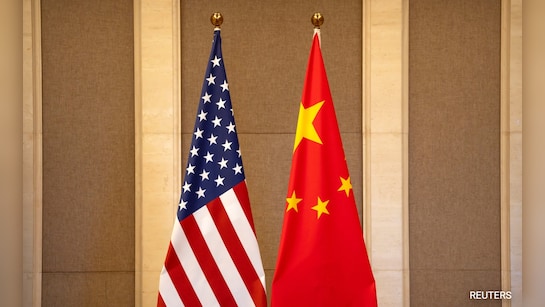
The evolving US-China relationship dynamics and their intermittent trade conflicts hold significant relevance for India beyond mere academic interest. Examining the complex interplay between these global powers reveals a relationship oscillating between collaboration and confrontation, characterized by a deep and turbulent history. For Indians, this narrative serves both as a reflection of our strategic landscape and as an interpretive framework for understanding India's ambitions and vulnerabilities in today's multipolar world order.
In his compelling new book, "Breaking the Engagement: How China Won and Lost America," distinguished American scholar David Shambaugh warns against the idealistic notion still harbored by some Americans of returning to a harmonious bilateral relationship with China. He emphatically declares that the era of American engagement with China is "dead."
This assessment aligns with current realities; American public opinion regarding China has deteriorated significantly, with surveys showing eight in ten Americans viewing China unfavorably and nearly half considering it an adversary. This sentiment permeates the political establishment and manifests in policy decisions: elevated tariffs (albeit subject to the Trump administration's characteristic reversals), visa limitations, and restrictions on Chinese students—particularly ironic given that many American universities have unwittingly educated individuals who now shape China's emergence as a rising superpower.
Historically, America's approach toward China was characterized by what might be termed a "missionary complex"—an aspiration not simply to conduct trade but to transform China into conformity with Christian-influenced liberal democratic ideals. Since the late 18th century, American policy has sought to influence China's religious, intellectual, social, economic, and political foundations, often motivated by a peculiar blend of capitalistic interest and paternalistic attitude. These efforts fluctuated as Chinese nationalism gained momentum—a continuous oscillation between American condescension and Chinese self-assertion.
Until approximately 2012-13, this indulgent American paternalism persisted, as US capital's interest in affordable Chinese labor and efficient manufacturing (providing less expensive goods for American consumers) aligned with China's commitment to pursuing its "peaceful rise" through economic materialism rather than ideological confrontation. China embraced growth through global manufacturing under leaders like Deng Xiaoping, Jiang Zemin, and Hu Jintao—who, despite their differences, viewed China's ascent as compatible with an international order shaped by American principles.
Xi Jinping's leadership has fundamentally altered this dynamic. His nationalist, hardline stance, effectively rejecting significant aspects of China's reformist trajectory, has forced the United States to redefine its approach from engagement to strategic competition. This transformation has increasingly captured New Delhi's attention.
Donald Trump's initial election in 2016 accelerated this shift further. Trump's aggressive, confrontational policies were reinforced—and arguably intensified—by the rhetoric of the current Trump 2.0 administration. Despite tonal and nuanced differences between the Biden and Trump eras, the overarching trajectory remains consistent: acknowledging that America must prepare for a world where China represents not a potential partner but a formidable competitor. Shambaugh's analysis offers a nuanced perspective: the conflict's core stems from fundamental systemic differences. China's one-party governance, characterized by widespread repression, economic overcapacity, demographic challenges, and assertive foreign policy, reveals vulnerabilities often obscured by its rapid growth. This provides India with an important lesson: dependence on inflexible governance models—whether Chinese authoritarianism or India's over-regulated "partly-free-enterprise" framework—carries substantial risks, particularly when entangled with global power dynamics.
The trajectory, as Shambaugh suggests, points toward "competitive coexistence"—a state where both powers vie for influence while avoiding direct conflict. For India, intent on peaceful ascendance and establishing its regional and global presence, this paradigm emphasizes the importance of strategic autonomy. We must navigate coexistence with the US, China, and other powers by developing our distinct strategic identity rather than merely balancing external forces. However, this doesn't advocate for non-alignment in a potential future superpower standoff; during the original Cold War, non-alignment was feasible because neither superpower directly threatened our borders, claimed our territory, or heavily armed our hostile neighbors. Today's emerging Cold War eliminates that luxury.
Perhaps Shambaugh's most provocative—yet relevant—proposal for India involves reconsidering economic relations with China by potentially applying principles similar to America's "Trading With the Enemy Act" to scrutinize transactions threatening national interests. Though controversial, this principle remains essential—India cannot unwittingly strengthen a system that might undermine its sovereignty. While we welcome Chinese investment, we must remain vigilant that it doesn't become a Trojan horse compromising our vital national interests.
For India, the ultimate lesson is one of pragmatic assertiveness. As China continues its rise—driven by nationalism, economic resilience, and despite systemic weaknesses—India must remain vigilant. We need to leverage our strengths—democratic vitality, favorable demographics, and advancing technological innovation—to develop foreign policy that acknowledges bipolar competition without surrendering to passive accommodation justified by outdated doctrines.
In conclusion, the US-China relationship, viewed through Shambaugh's analysis, offers India sobering insights. It emphasizes that global power now operates on a multipolar chessboard requiring strategic sophistication, resilience, and clarity of purpose. As we forge our path forward, India must recognize that future success belongs not to those who imitate either the American or Chinese models, but to those who craft their own narrative of growth and sovereignty amid the inevitable complexities of international relations in our uncertain world.
(Shashi Tharoor has been a Member of Parliament from Thiruvananthapuram, Kerala, since 2009. He is a published author and a former diplomat.)
Disclaimer: These are the personal opinions of the author