
Opinion | How China Has Been Blocking India's UNSC Actions Since The 2000s
China's pattern of using "technical holds" in the UNSC 1267 Sanctions Committee can be traced to the early 2000s.
- Date & Time:
- |
- Views: 53
- |
- From: India News Bull
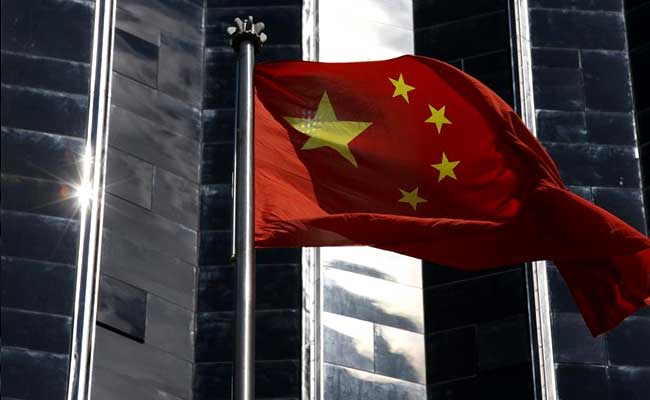
China has established itself as a crucial third player in the India-Pakistan strategic relationship, transforming what was once a bilateral conflict into a triangular dynamic. While Beijing has no interest in military escalation in the subcontinent, its pro-Pakistan stance frequently manifests in international forums. Recently, China blocked the designation of The Resistance Front (TRF), reportedly a Lashkar-e-Taiba (LeT) offshoot, following the Pahalgam attack of 2025. This action exemplifies a consistent pattern where China impedes India's diplomatic initiatives to isolate Pakistan-based organizations globally.
As India works to build international consensus on counterterrorism designations at the UN Security Council (UNSC), China regularly obstructs by blocking or delaying the listing of individuals connected to anti-India groups like LeT and Jaish-e-Mohammed (JeM). The "technical hold" mechanism in UNSC sanctions procedures allows a member state to indefinitely postpone designations without formally using a veto. For years, China has utilized this approach to delay sanctions against Pakistan-linked terror networks without causing direct diplomatic confrontation.
The symbolic relationship between China and Pakistan, which former Pakistani Prime Minister Yusuf Raza Gilani described as "higher than mountains, deeper than oceans, stronger than steel, and sweeter than honey," has translated into consistent strategic protection for Pakistan internationally. Chinese media's characterization of terrorist incidents in India, such as the Pahalgam attack, as merely "shootings" by local gunmen against civilians, reinforces Pakistan's narrative about the conflict.
'Technical Holds'
China's systematic use of "technical holds" in the UNSC 1267 Sanctions Committee dates back to the early 2000s. Following the 2001 attack on India's Parliament, India began campaigning for international sanctions against Pakistan-based groups. While China supported designating organizations like LeT and JeM after the September 11, 2001 attacks, it remained hesitant to target individuals associated with these anti-India groups, particularly JeM leader Masood Azhar, who was finally listed in 2019. India first formally requested Azhar's listing in 2009 after the Mumbai attacks, with subsequent attempts in 2016, 2017, and 2019. Though international pressure eventually led to his designation after two decades, the omission of any reference to the Pulwama attack in the final listing allowed China to maintain that Azhar's designation stemmed from his long-term terrorism connections rather than a specific attack on India.
The 2016 Pathankot attack and 2019 Pulwama suicide bombing prompted intensified Indian diplomatic efforts against Pakistan-based terrorist leaders and groups. All these initiatives faced obstruction through China's technical holds, despite co-sponsorship from France, the UK, and the US. This pattern continues, with Beijing blocking a joint India-US proposal to list Abdul Rauf Asghar and other anti-India terrorists in 2023.
Double Standards
This position contradicts China's own counterterrorism stance against separatist and Islamist groups threatening Chinese nationals and investments in Pakistan, including in major cities like Karachi. In 2021, a Baloch Liberation Army's (BLA) Majeed Brigade suicide bomber attacked a convoy of Chinese engineers and workers near Karachi's Jinnah International Airport and Chinese consulate area, killing three Chinese nationals. China has similarly raised concerns with the Taliban administration in Afghanistan regarding the alleged presence of Uyghur militant groups like the East Turkestan Islamic Movement (ETIM). This contradictory approach serves dual purposes – reducing pressure on Pakistan's influential military establishment while keeping India preoccupied with cross-border security challenges.
The SCO Factor
China's selective counterterrorism approach also manifests in multilateral organizations like the Shanghai Cooperation Organisation (SCO), a key vehicle for its regional influence. With India and Pakistan becoming full members in 2017, China portrayed the bloc as a pan-Asian alternative to Western-led groups. However, India's strong position against cross-border terrorism and alignment with QUAD has complicated this narrative.
India's limited participation in the SCO, particularly since 2019, increasingly reflects the grouping's silence on cross-border terrorism allegations against Pakistan. India's decision to downgrade to virtual participation in the 2023 summit further challenges China's efforts to position the SCO as a counterweight to US regional influence. For China, India's continued engagement in the SCO remains essential for the bloc's diplomatic credibility. India could continue framing Chinese obstructionism as a significant concern for global counterterrorism efforts, aiming to increase the reputational and diplomatic costs of China's inaction, without relying exclusively on the UNSC system.
India's expanding engagement with QUAD, involving Australia, Japan, India, and the US, through military exercises and joint dialogues, will also keep China on alert by signaling a strengthened Indo-Pacific alliance countering Chinese regional influence.
(Aishwaria Sonavane is a research analyst at the Takshashila Institution)
Disclaimer: These are the personal opinions of the author