
crop residue management
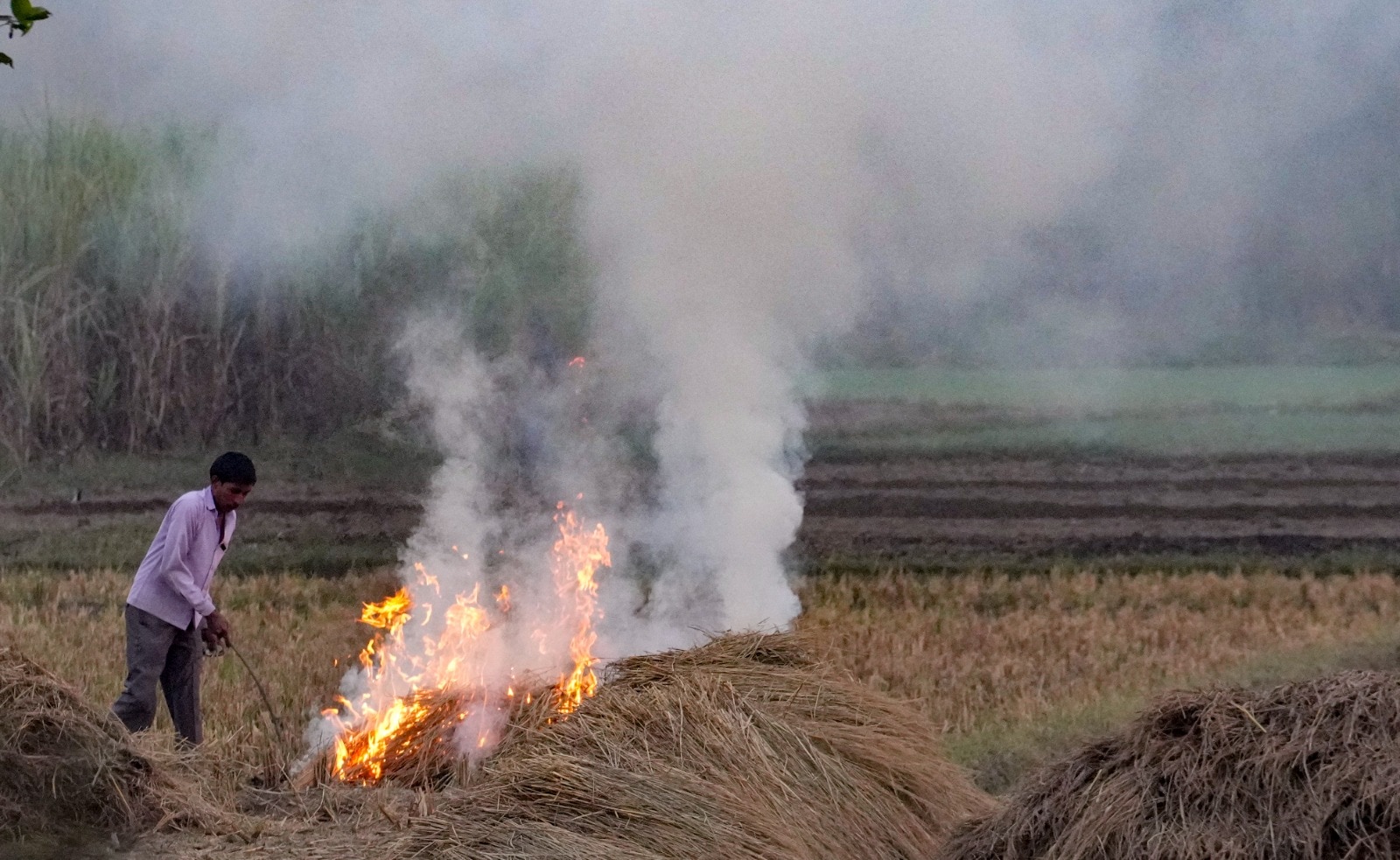
Record-Breaking Decline in Farm Fires: Punjab and Haryana Report Lowest Stubble Burning Incidents in 5 Years
Dec 02, 2025 02:12 am CST
Farm fire incidents in Punjab and Haryana have reached their lowest levels in five years during the 2025 paddy harvesting season, with Punjab reporting 5,114 cases (53% reduction from 2024) and Haryana documenting 662 incidents. The Commission for Air Quality Management attributes this success to comprehensive action plans, advanced machinery adoption, and innovative paddy straw utilization methods, significantly improving Delhi-NCR's air quality.
90% Reduction in Stubble Burning Across Punjab and Haryana: Government Reports Progress Amid Delhi's Air Quality Challenges
Dec 01, 2025 07:24 pm CST
The Indian government reports a significant 90% reduction in stubble burning incidents in Punjab and Haryana during the 2025 paddy harvesting season compared to 2022 levels. Despite this progress, Delhi-NCR continues to face air pollution challenges from multiple sources, though the capital has recorded its best average AQI levels in eight years with increased "good" air quality days and fewer "severe" pollution days.

CAQM Urges Punjab to Accelerate Stubble Burning Prevention While Praising Haryana's Significant Progress
Nov 09, 2025 12:46 am CST
The Commission for Air Quality Management has called for urgent action from Punjab to address stubble burning incidents, as the state shows only marginal improvement with 3,284 fire incidents recorded between September 15 and November 6. Meanwhile, Haryana has demonstrated significant progress, reducing farm fires by 76% compared to last year through proactive enforcement and improved crop residue management approaches.
Punjab Stubble Burning Cases Surge to 484: Impact on Delhi-NCR Air Quality and Enforcement Measures
Oct 23, 2025 06:52 pm CST
Punjab has witnessed a sharp increase in stubble burning incidents, with 484 cases recorded between September 15 and October 22. Tarn Taran and Amritsar districts lead with the highest number of farm fires, as authorities impose fines and register FIRs against violators. Despite a 70% decrease from previous years, the practice continues to contribute significantly to air pollution in the Delhi-NCR region, prompting stricter enforcement measures including red entries in land records.

Haryana Achieves 95% Reduction in Stubble Burning: A Model for Agricultural Waste Management
Oct 08, 2025 01:33 am CST
Haryana has implemented a comprehensive strategy that has reduced paddy crop residue burning by 95% compared to last year. With only 7 fire incidents reported versus 150 in the previous year, the state's approach combines 9,036 monitoring officers, extensive machinery deployment, partnerships with IOCL for ethanol production, and strict enforcement measures, establishing a new benchmark in sustainable agricultural waste management and air quality improvement.
CAQM Intensifies Anti-Stubble Burning Measures in Punjab and Haryana to Reduce Delhi's Winter Pollution
Sep 27, 2025 12:33 am CST
The Commission for Air Quality Management (CAQM) has launched flying squads and established a coordination cell in Mohali to combat stubble burning in Punjab and Haryana. The initiative focuses on proper crop residue management through in-situ and ex-situ methods, with increased surveillance and penalties for non-compliance to improve Delhi's air quality during winter months.